
IRAQ: 'CHEMICAL ALI' CONDEMNED TO DEATH FOR THIRD TIME
An Iraqi court condemned Saddam Hussein's notorious henchman, "Chemical Ali" Hassan
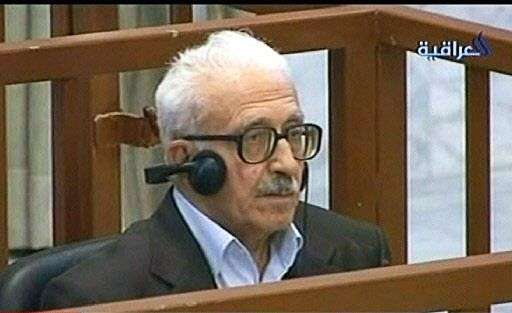
An Iraqi court condemned Saddam Hussein's notorious henchman, "Chemical Ali" Hassan al-Majid, to his third death sentence over the murder of Shiite Muslims 10 years ago.
Former army officer Mahmud Faizi al-Hazaa and senior Baath Party official Aziz Saleh Hassan were also condemned to death.
However, the Iraqi High Tribunal acquitted former deputy prime minister Tareq Aziz, long regarded as Saddam's spokesperson to the outside world, on the same charges of crimes against humanity.
“Chemical Ali" and Aziz were accused with 12 other officials of Saddam's regime of involvement in the deaths of dozens of Shiites in 1999 in the Sadr City district of Baghdad and in the central shrine city of Najaf.
Troops were ordered into Shiite areas to stop public protests after the assassination of revered Shiite cleric Mohammed Sadeq al-Sadr, after whom Sadr City is named.
Majid was sentenced to death in June 2007 for genocide after ordering the deaths of tens of thousands of Kurds during the 1988 Anfal campaign, when Iraqi forces strafed villages with poison gas, the source of his grim nickname.
He was also given a second death penalty for war crimes and crimes against humanity over a bloody crackdown on Shiites during their ill-fated uprising after the 1991 Gulf War.
However, his execution has been repeatedly held up and he remains in the custody of United States officials.
Former army officer Mahmud Faizi al-Hazaa and senior Baath Party official Aziz Saleh Hassan were also condemned to death.
However, the Iraqi High Tribunal acquitted former deputy prime minister Tareq Aziz, long regarded as Saddam's spokesperson to the outside world, on the same charges of crimes against humanity.
“Chemical Ali" and Aziz were accused with 12 other officials of Saddam's regime of involvement in the deaths of dozens of Shiites in 1999 in the Sadr City district of Baghdad and in the central shrine city of Najaf.
Troops were ordered into Shiite areas to stop public protests after the assassination of revered Shiite cleric Mohammed Sadeq al-Sadr, after whom Sadr City is named.
Majid was sentenced to death in June 2007 for genocide after ordering the deaths of tens of thousands of Kurds during the 1988 Anfal campaign, when Iraqi forces strafed villages with poison gas, the source of his grim nickname.
He was also given a second death penalty for war crimes and crimes against humanity over a bloody crackdown on Shiites during their ill-fated uprising after the 1991 Gulf War.
However, his execution has been repeatedly held up and he remains in the custody of United States officials.
— SOURCES
- (Sources: Afp, 02/03/2009)