
AFGHANISTAN: STONING WILL NOT BE BROUGHT BACK, SAYS PRESIDENT
Afghanistan's government has backed away from a proposal to reintroduce public stoning as a punishment for adultery after the leak of a draft law stirred up a storm of international condemnation.
Afghanistan's government has backed away from a proposal to reintroduce public stoning as a punishment for adultery after the leak of a draft law stirred up a storm of international condemnation.
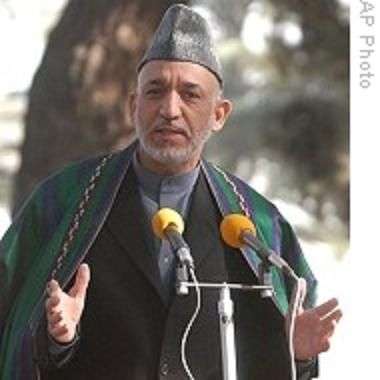
The president, Hamid Karzai, said in an interview that the grim penalty, which became a symbol of Taliban brutality when the group were in power, would not be coming back.
"It is not correct. The minister of justice has rejected it," he told Radio Free Europe, days after the UK minister Justine Greening urged him to prevent the penalty becoming law.
Afghanistan's penal code dates back over three decades. The government is drawing up a new one to unify fragmented rules and cover crimes missed out when the last version was written, such as money laundering, and offences that did not even exist at the time, such as internet crimes.
The justice minister presiding over the reform is an outspoken conservative who last year denounced the country's handful of shelters for battered women as brothels.
As part of the process, a committee tasked with looking at sharia law came up with draft legislation that would have condemned married adulterers to the slow and gruesome death; unmarried people who had sex would be flogged.
But after several days of silence in the face of growing international outcry, the justice ministry said in a statement that although stoning had been proposed it would not appear in the new legislation because there was "no need to regulate the issue".
The country's penal code already encompasses sharia law, but some controversial aspects of traditional punishments such as stoning have never been put on the books in Afghanistan.
The president, Hamid Karzai, said in an interview that the grim penalty, which became a symbol of Taliban brutality when the group were in power, would not be coming back.
"It is not correct. The minister of justice has rejected it," he told Radio Free Europe, days after the UK minister Justine Greening urged him to prevent the penalty becoming law.
Afghanistan's penal code dates back over three decades. The government is drawing up a new one to unify fragmented rules and cover crimes missed out when the last version was written, such as money laundering, and offences that did not even exist at the time, such as internet crimes.
The justice minister presiding over the reform is an outspoken conservative who last year denounced the country's handful of shelters for battered women as brothels.
As part of the process, a committee tasked with looking at sharia law came up with draft legislation that would have condemned married adulterers to the slow and gruesome death; unmarried people who had sex would be flogged.
But after several days of silence in the face of growing international outcry, the justice ministry said in a statement that although stoning had been proposed it would not appear in the new legislation because there was "no need to regulate the issue".
The country's penal code already encompasses sharia law, but some controversial aspects of traditional punishments such as stoning have never been put on the books in Afghanistan.
— SOURCES
- (Sources: theguardian.com, 28/11/2013)