
USA: BOSTON MARATHON BOMBER SENTENCED TO DEATH, A PURELY SYMBOLIC JUDGEMENT IN A DE FACTO MORATORIUM REGIME
Dzhohkar Tsarnaev was sentenced to death by a federal jury for helping carry out the 2013 attack that killed three people and wounded 264 others in the crowds at the finish line of the Boston Marathon. But his execution may not happen for decades – if eve
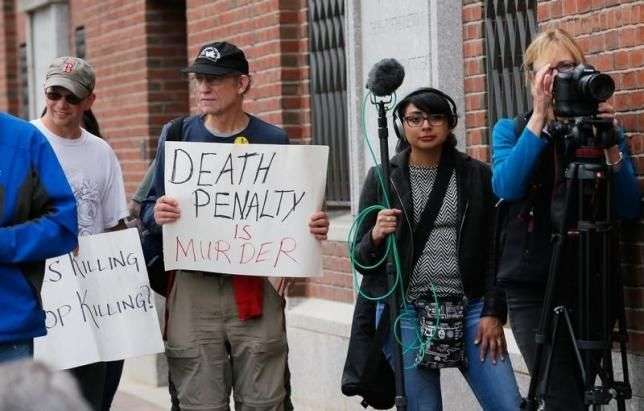
Dzhohkar Tsarnaev was sentenced to death by a federal jury for helping carry out the 2013 attack that killed three people and wounded 264 others in the crowds at the finish line of the Boston Marathon. But his execution may not happen for decades – if ever.
A lengthy appellate process, an effective moratorium on federal executions and declining support among Americans for capital punishment all suggest that Tsarnaev’s death by lethal injection is far from a sure thing, according to death penalty experts. Instead, it may end as a purely symbolic judgement.
"With every passing year, the likelihood of execution will diminish," said Deborah Denno, a law professor at Fordham University who has studied capital punishment.
While Massachusetts has banned the death penalty, Tsarnaev was convicted of federal crimes, which can carry a death sentence under U.S. law.
However, President Barack Obama has ordered a review of the government’s use of lethal injection, effectively implementing a moratorium on federal executions, while saying there are "significant questions" about whether capital punishment is applied fairly.
Some experts said the Obama administration’s two-pronged approach – pursuing a death sentence even as it reviews the use of capital punishment – shows it was more interested in securing the "symbolic" victory of a death sentence than in carrying it out.
At the federal level, only three defendants out of the 74 sentenced to death since 1988 have been executed, according to the Death Penalty Information Center. The first was the Oklahoma City bomber Timothy McVeigh, who killed 168 people in a truck bombing in 1995 and was executed in 2001 after dropping his appeal.
Frank Zimring, a law professor at the University of California in Berkeley, said the low number reflects not only a complicated and long appellate process but a growing distaste for carrying out death sentences. "Nobody’s anxious to have federal executions," he said, noting that the last occurred in 2003. "We’re in a period of national reconsideration of capital punishment," said Austin Sarat, a political science professor at Amherst College and the author of Gruesome Spectacles: Botched Executions and America’s Death Penalty. "There’s a lot of evidence that what Americans want are death sentences, not executions," Sarat said.
A lengthy appellate process, an effective moratorium on federal executions and declining support among Americans for capital punishment all suggest that Tsarnaev’s death by lethal injection is far from a sure thing, according to death penalty experts. Instead, it may end as a purely symbolic judgement.
"With every passing year, the likelihood of execution will diminish," said Deborah Denno, a law professor at Fordham University who has studied capital punishment.
While Massachusetts has banned the death penalty, Tsarnaev was convicted of federal crimes, which can carry a death sentence under U.S. law.
However, President Barack Obama has ordered a review of the government’s use of lethal injection, effectively implementing a moratorium on federal executions, while saying there are "significant questions" about whether capital punishment is applied fairly.
Some experts said the Obama administration’s two-pronged approach – pursuing a death sentence even as it reviews the use of capital punishment – shows it was more interested in securing the "symbolic" victory of a death sentence than in carrying it out.
At the federal level, only three defendants out of the 74 sentenced to death since 1988 have been executed, according to the Death Penalty Information Center. The first was the Oklahoma City bomber Timothy McVeigh, who killed 168 people in a truck bombing in 1995 and was executed in 2001 after dropping his appeal.
Frank Zimring, a law professor at the University of California in Berkeley, said the low number reflects not only a complicated and long appellate process but a growing distaste for carrying out death sentences. "Nobody’s anxious to have federal executions," he said, noting that the last occurred in 2003. "We’re in a period of national reconsideration of capital punishment," said Austin Sarat, a political science professor at Amherst College and the author of Gruesome Spectacles: Botched Executions and America’s Death Penalty. "There’s a lot of evidence that what Americans want are death sentences, not executions," Sarat said.
— SOURCES
- (Sources: Joseph Ax/Reuters, 15/05/2015)