
USA - Hegseth Wants to Stream the Execution of Nidal Hasan
But it is not certain that the execution will take place
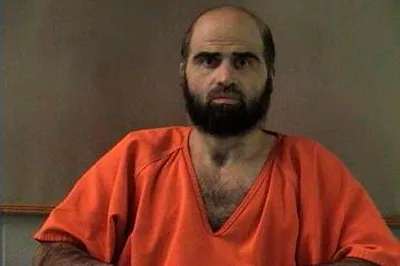
October 09, 2026 - USA (Military). Hegseth Wants to Stream the Execution of Nidal Hasan
The public will be able to watch the execution of a former US Army major by firing squad, US Defence Secretary Pete Hegseth has said.
It is believed it would be the first public execution in the US in almost a century. The decision to livestream it is "unprecedented in the modern era" and "on uncertain legal terrain", said John Mills, a lawyer who works with inmates sentenced to death.
"People need to understand that there's serious consequences for these types of things," said Hegseth.
The Pentagon announced earlier this week it would execute Hasan in the first military execution in more than 60 years.
Hasan, a US Army psychiatrist from Virginia, admitted fatally shooting 13 unarmed soldiers in a crowded medical building at Fort Hood.
Alonzo Lunsford, a former US Army sergeant who was shot seven times in the attack, told the BBC's Today programme that he supported the execution by firing squad as a method "befitting" what he did.
He does not believe everyone should be able to watch the livestream, concerned about the message it sends younger people, but says it is important that those affected by the shooting are given the opportunity.
"As far as the families of the fallen and the families of the survivors, and the survivors themselves, yes, I think we should be able to look at it uncensored."
Lunsford says he plans to attend the execution, and before they pull the trigger, he wants Hasan to look him in the eyes. "I want him to know he failed. I'm still here."
Hegseth said in an interview with conservative TV outlet Real America's Voice that Hasan is "gonna get a firing squad of soldiers. As it should be."
Asked if Hasan had made any final requests or reached out to President Donald Trump, Hegseth said, "Don't care. We'll see him on December 3rd."
While there were more than 2,700 executions across 17 countries last year, only two countries carried them out publicly. Eleven public executions were known to have been carried out in Iran in 2025 and another six in Afghanistan.
Public executions, as the New York Times points out, are now carried out only by a few countries—such as Iran, North Korea, and Afghanistan—and the United States has not conducted them for 90 years. Above all, the newspaper emphasizes that the sharing of videos of executions is “usually associated with extremist militant groups such as the Islamic State.” The decision has also been criticized by the UN, which, through the Office of the High Commissioner for Human Rights, stated: “It would violate the absolute prohibition against torture.” According to Amnesty International, there were eleven public executions in Iran in 2025 and another six in Afghanistan.
The execution is scheduled to take place at Fort Hood in Texas on 3 December. Both the method of execution—by firing squad—and the location, the secretary added, have symbolic significance: “We’ll do it on Thursday at 1:00 p.m., just as he (Hasan, ed.) did, and soldiers with rifles will carry out the execution. This hasn’t happened since World War II.” He then added: “Well, in a way, I liked the mindset we had during World War II.”
Just a few hours after Hegseth’s announcement, however, Vice President J. D. Vance stated that he would not watch the execution if it were streamed.” And that evening, the American bishops condemned the defense secretary’s decision, calling it “a barbaric promotion of the culture of death.”
It will be the first military execution by firing squad since the end of World War Two.
In court Hasan apologised for "any mistakes". He said during his court martial in 2013 that he believed he was protecting Muslims and the Taliban in Afghanistan.
A military execution requires approval from the US president, according to military law. It also requires appellate review, where a higher court inspects the decision, and a final judgement on its legality to move forward.
The appellate process for Hasan is not over, Mills said, and he is likely to seek review of his conviction and sentence in federal court, which would likely stay the execution.
As such, Mills said that he would be surprised if the execution happened.
"Seeking to make it livestreamed, a firing squad execution, is little more than attention-seeking by the Trump administration and is unlikely to occur, much less deliver any semblance of justice," he added.
Certain states require some form of public viewing of executions. Many states require journalists to be present, and the person due to be executed can invite people. Others also allow ordinary citizens to volunteer as witnesses.
But "there hasn't ever been a livestreamed execution," says Deborah Denno, a law professor at Fordham University, who has studied US execution methods.
A livestreamed execution would "force a level of transparency that we have probably never seen before in this country", she says.
"More than half of the country wants the death penalty - even though that's on the decline - an argument could be made that 'if you want the death penalty, then we are going to show you how it's conducted in this country'. And people would have to realise exactly what's happening in a way that many people ignore."
Denno says there are important considerations for a livestream such as whether it would be age-restricted and whether it would contravene the policies of the online platform that hosts the viewing.
The US government had not executed anyone for 17 years until the final year of Trump's first term as president, when it conducted a flurry of 13 executions. Upon returning to office, Trump swiftly overturned predecessor Joe Biden's moratorium on federal executions.
The last military execution in the country took place in 1961, when a US Army private was hanged after being convicted of raping an 11-year-old Austrian girl. The execution was authorised by then-President Dwight D Eisenhower and took place despite the victim's family asking his successor, John F Kennedy, for clemency.
The last military execution by firing squad took place in January 1945, when a young US Army deserter, Eddie Slovik, was shot during the final months of World War Two.
Experts said there was no known precedent for livestreaming a legal execution. The execution of the Oklahoma City bomber Timothy McVeigh in 2001 was made available to victims’ relatives through closed-circuit television, but was not broadcast publicly.
Background
Nidal Malik Hasan is a former U.S. Army major and psychiatrist who, on November 5, 2009, opened fire at a soldier processing centre at Fort Hood, Texas, killing 13 people and wounding 32 others.
An American-born officer of Palestinian descent, he shouted “Allahu akbar” during the attack and later said he had acted to protect Islamic militants abroad and had “switched sides” in what he called a war against Islam. In August 2013 a military jury convicted him of 13 counts of premeditated murder and 32 counts of attempted premeditated murder and sentenced him to death, along with dismissal from the Army.
In reality, as Professor Deborah Denno has partly pointed out, the idea that executions should be “open to the public” and possibly televised is a long-standing talking point among abolitionists, who are convinced that many people continue to say they support the death penalty because they view it as a “theoretical” issue, and that once confronted with the brutality of the act, they would change their minds. Obviously, neither Trump nor Hegseth care about the abolitionists’ views; instead, they believe that such a terrible act will win them political support. Trump, in particular—after ordering the execution of 13 federal inmates in the months leading up to the last election campaign (the 2020 election, which he ultimately lost to Biden)— as the November midterm elections approached—unable to execute any more federal inmates, nearly all of whom had been pardoned by Biden (and the cases of those not pardoned are not yet finalized)—he “drew” new victims from another “federal” sector: military justice. The military justice system has “only” four men on death row (no women), and this won’t provide much fuel for Trump’s election campaign; but in the meantime, the choice of Nidal Hasan—a Palestinian who killed American soldiers while shouting “Allāhu akbar”—certainly seems perfect to announce just before the midterm elections. Many observers believe that the upcoming midterm elections could deprive Trump of the slim Republican majority he currently holds in Congress and significantly weaken him.
On November 3, the midterm elections will result in the renewal of the entire House of Representatives, about one-third of the Senate, 36 governors, and over 6,000 state legislators, local officials, and state judges.
Executions of “military personnel” are extremely rare because it is standard practice for presidents not to insist on setting a date, on the grounds that the fact that the condemned have “served the state” merits, if not an actual act of clemency, at least a gesture of clemency “by omission”—that is, by not setting a date. (Editor's note)
- (Source: BBC News)
- https://www.bbc.com/news/articles/cmy0r96xygx6o