
A large number of offences, including political offences and economic “crimes” are punishable by death.
A large number of offences, including political offences and economic “crimes” are punishable by death.
2 MIN READ
A large number of offences, including political offences and economic “crimes” are punishable by death.
The law mandates the death penalty for any person associated with a group opposed to the principles of the 1969 revolution, as well as for other acts such as treason and attempting to change the form of government by violence.
The "Green Book" of 1988 states that "the goal of the Libyan society is to abolish capital punishment;" however, the Government has not acted to abolish the death penalty, and its scope has increased.
The law also applies the death penalty to those who speculate in foreign currency, food, clothing, or housing during a state of war or a blockade, and for crimes related to drugs and alcohol (since 1996).
Article 206 of the penal code imposes the death penalty on those who call "for the establishment of any grouping, organization or association proscribed by law," and on those who belong to or support such an organization.
Article 166 of the penal code imposes the death penalty on anyone who talks to or conspires with a foreign official to provoke or contribute to an attack against Libya.
In recent years various UN bodies have expressed concern about the human rights situation in Libya where extrajudicial and summary executions continue to take place, the death penalty is imposed for economic and political crimes, arbitrary arrests are frequent, torture is used and the judiciary is not independent.
Information concerning death sentences and executions does not filter through.
Libya was known to have put six foreign nationals to death in July 2005. It was the first time in eight years that news of executions filtered through.
The last recorded executions before the July 2005 ones, were those of eight men put to death in January 1997. Colonel Miftah Qarrum al-Wirfalli, five other senior army officers and two civilians were put to death. They had been arrested in relation to an army uprising in 1993 and accused of espionage in favour of the United States and of belonging to the National Front for the Salvation of Libya, an opposition group in exile.
The law mandates the death penalty for any person associated with a group opposed to the principles of the 1969 revolution, as well as for other acts such as treason and attempting to change the form of government by violence.
The "Green Book" of 1988 states that "the goal of the Libyan society is to abolish capital punishment;" however, the Government has not acted to abolish the death penalty, and its scope has increased.
The law also applies the death penalty to those who speculate in foreign currency, food, clothing, or housing during a state of war or a blockade, and for crimes related to drugs and alcohol (since 1996).
Article 206 of the penal code imposes the death penalty on those who call "for the establishment of any grouping, organization or association proscribed by law," and on those who belong to or support such an organization.
Article 166 of the penal code imposes the death penalty on anyone who talks to or conspires with a foreign official to provoke or contribute to an attack against Libya.
In recent years various UN bodies have expressed concern about the human rights situation in Libya where extrajudicial and summary executions continue to take place, the death penalty is imposed for economic and political crimes, arbitrary arrests are frequent, torture is used and the judiciary is not independent.
Information concerning death sentences and executions does not filter through.
Libya was known to have put six foreign nationals to death in July 2005. It was the first time in eight years that news of executions filtered through.
The last recorded executions before the July 2005 ones, were those of eight men put to death in January 1997. Colonel Miftah Qarrum al-Wirfalli, five other senior army officers and two civilians were put to death. They had been arrested in relation to an army uprising in 1993 and accused of espionage in favour of the United States and of belonging to the National Front for the Salvation of Libya, an opposition group in exile.
KEEP READING
ALL THE NEWS · DEATH PENALTY On the same front

DEATH PENALTYAUGUST 31, 2026
Pakistan: ASI sentenced to death for killing two brothers in Swabi

DEATH PENALTYAUGUST 31, 2026
Bangladesh: HC confirms death sentence of lone accused for rape, murder of 8-year-old Asiya

DEATH PENALTYAUGUST 30, 2026
Pakistan: Man sentenced to death, brother gets life term for double murder in 2021
DEATH PENALTYAUGUST 23, 2026
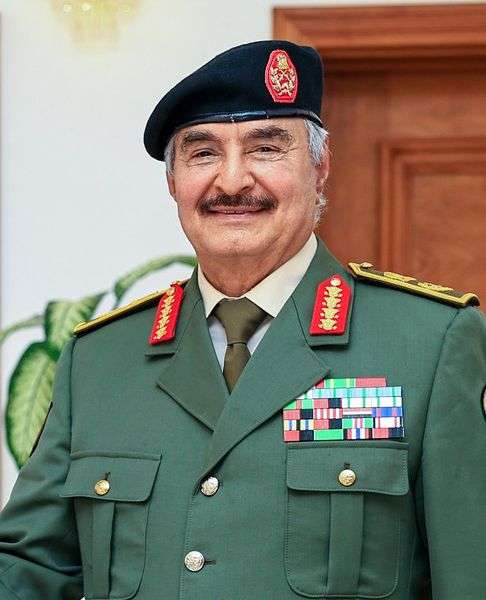
Eastern Libya executes 10 convicted on terrorism charges

DEATH PENALTYAUGUST 21, 2026
Japan: man executed over killing 5 people
DEATH PENALTYAUGUST 15, 2026