
Death sentences are mandatory for murder but also non lethal offences
Death sentences are mandatory for murder but also non lethal offences
12 MIN READ
Death sentences are mandatory for murder but also non lethal offences such as armed robbery and treason. There are other capital crimes such offences against the State.
The presidency of Olusegun Obasanjo, whose democratic election in 1999 brought to an end 15 years of military rule, led the country back into the Commonwealth, from which it had been suspended in 1995 after then dictator Sani Abacha ordered the execution of writer Ken Saro-Wiwa and other Ogoni activists.
Since 1999, 12 northern states have introduced Sharia law. The cases concerning Safiya Hussaini and Amina Lawal, two women condemned to death-by-stoning by Sharia courts, drew international attention but the federal government of Nigeria has repeatedly stated that the Federal Constitution does not allow stoning and similar punishments. President Olusegun Obasanjo described these moves as "political Sharia" - an instrument in the hands of the state governments to impose conditions on the federal government - destined to fizzle out with time.
In January 2000, President Olusegun Obasanjo pardoned death row inmates who had been awaiting execution for over 20 years and commuted to life terms the death sentences of inmates who had spent between 10 and 20 years on death row. In October 2002, during a meeting with an HOC delegation visiting Nigeria, he said: "As President I am committed to saving lives and not eliminating them." He said he adhered to HOC's worldwide campaign for a moratorium on executions and stated that he was committed to it "here in our country and internationally."
On June 24, 2013 Nigeria resumed executions and hanged four people in the prison of Benin City, in Edo State. These are first executions since 2006.
Since the move from military rule to democracy in May 1999, at least 750 people have been sentenced to death in Nigeria, according to Amnesty International. During the same period, at least 22 people were executed.
In 2010 at least 151 people were sentenced to death. In 2011, at least 72 new death sentences were imposed and according to government information, 56 death sentences were imposed in 2012.
As of October 2011, according to Amnesty International, at least 20 juvenile offenders remained on death row in Nigeria in violation of international and national law. In 2010, the UN Committee on the Rights of the Child had expressed serious concern at reports of an estimated 40 child offenders on Nigeria’s death row, although this Country is not known to have executed a juvenile offender since 1997. Their ages at the time of their alleged crimes ranged from 13 to 17 years old.
As of 4 December 2012, there were at least 970 inmates on death row, awaiting their execution. This figure comprises 951 males and 19 females and is as a result of the refusal of successive state governors to sign their execution order. The Public Relations Officer of the Nigeria Prisons Service (NPS), Kayode Odeyemi, has absolved the NPS of blame for the delay in the execution of inmates on death row. He said, “How can we carry out executions without executive orders from the governors? We don’t have the power to do that and since the governors are reluctant to sign the death warrants, we have to keep the condemned inmates on death row indefinitely.”
Two expert groups had been set up by the former President, Olusegun Obasanjo, to reform the prison system and deal with the problem of overcrowding in prisons. The groups, the National Study Group on Death Penalty, established in 2004, and the Presidential Commission on Reform of the Administration of Justice, established in 2007, both recommended a moratorium on executions because the criminal justice system could no longer guarantee fair trial at all time.
On 29 May 2011, Ondo State Governor Olusegun Mimiko commuted the death sentences passed on three people to life imprisonment to mark the Democracy Day. Sunday John, Ayodele Ikuomenihan and Oluwatimilehin Ifaramoye, who were condemned to death by hanging for murder, have been awaiting execution since September 2006.
On 21 August 2011, Katsina State Governor Ibrahim Shema commuted the death sentence passed on eight prisoners to life imprisonment in commemoration of Ramadan. Musa Dauda, Shehu Idi Magaye, Nura Sabo, Samanu Salisu, Shittu Jubrin, Aminu Sada, Abdulkarim Mohammed and Friday Patrick were selected due to good behaviour, their length of stay in prison, and the fact that they had not killed anyone.
On 26 January 2012, Ogun State Governor Ibikunle Amosun granted amnesty to seven prisoners, including two death row inmates, Messrs Rasidi Yisau and Saburi Adebayo, whose death sentence was commuted to life imprisonment. Amosun advised the prisoners to continue to be of good conduct as they return to the society and described prisons as reformatory centres, deploring the situation where people become hardened after a prison spell.
On 27 February 2012, Delta State Governor Emmanuel Uduaghan said he would not sign death warrants. Dr. Uduaghan, who stated this at a town hall meeting in Umeh Community, Isoko South Council Area of the State, said as a medical doctor he was trained to save lives and not to take them.
On 27 March 2012, at a conference organised by Lawyers Without Borders in Abuja, the Chief Justice of Nigeria, Justice Dahiru Musdapher, and Attorney General of the Federation, Mohammed Bello Adoke, has taken different positions. While the Chief Justice disagreed on the abolition of death penalty, saying it must be retained in the constitution, in spite of mounting pressure against it, the Attorney General was undecided, saying he could not say whether “it is right or wrong.” Justice Dahiru Musdapher stressed that in a constitutional democracy, neither the legislature nor the judiciary is supreme over the constitution, adding that unless the National Assembly amends the law, there is nothing anybody can do about it. ‘The constitution specifically provides for death penalty… In addition, the Supreme Court has in, a plethora of cases, upheld the constitutionality of death sentence in Nigeria,” Musdapher said. In his remarks, the Attorney General of the Federation and Minister of Justice, Mohammed Bello Adoke, said he could not take a position on whether death penalty should be abolished or not, a position supported by the National Human Rights Commission (NHRC). The Attorney General emphasised that death penalty is a constitutional matter, decrying that the judiciary has been reluctant in its application.
On 25 September 2012, a Lagos High Court Judge, Justice Mufutau Olokoba, has nullified the death sentence passed on five persons. This declaration followed an originating summons filed by Norrison Quakers (SAN) in 2008, against the Attorney-General of Lagos State on behalf of the five condemned persons, who were convicted at various occasions and for various offences between 1984 and 1995. They were to die by hanging or firing squad. The judge, who described the mode of execution of the said punishment as an infraction on the right to human dignity of the condemned persons, granted a perpetual injunction restraining the respondents (Lagos State Government) from executing the condemned persons by hanging or firing squad. Addressing the constitutionality of the methods of execution provided by the Criminal Procedure Law and the Robbery and Firearms Act, Olokoba said it was a violation of the right to human dignity of a person as provided by Section 34(1) of the 1999 Constitution. “Death by hanging or by firing squad amounts to a violation of the condemned’s right to dignity of the human person and inhuman and degrading treatment. It is consequently unconstitutional…” Olokoba said. Reacting to the judgment by the court, Quakers said it has revolutionized the administration of criminal justice as it is a departure from conservatism. He noted that until the judgment is reversed or set aside by an appellate court, it remains binding and any court that pronounces death by hanging or firing squad can be challenged based on the judgment by Olokoba.
On 18 October 2012, Edo State Governor, Comrade Adams Oshiomhole granted amnesty to two prisoners condemned to death: 32-year-old Monday Odu, who was a minor when he was convicted in 1997 for murder, and 52-year-old Calistus Eke, who was sentenced for armed robbery in 1996. The Governor also commuted to life imprisonment the death sentence of two others: Tijani Mustapha and Zubem Abduramma, who were both convicted for conspiracy and armed robbery. Speaking after granting amnesty to Odu and Eke, Oshiomhole said: “We have exercised the prerogative of mercy to release you from prison believing you have learnt your lesson. You can still be useful to society and useful to yourselves.” Odu and Eke were promised respectively N100,000 and N200,000 (about 600 and 1,200 USD) by the government to start their life over. “I hope you will be able to make something positive out of this your present condition,” the Governor said. On 22 October, Governor Adams Oshiomhole announced that, on 26 September, he had commuted to life imprisonmentthe death sentence against another inmate, Olu Fatogun, convicted of armed robbery. He said: "The case of Olu Fatogun was reviewed by the Advisory Council on the Prerogative of Mercy and they recommended that his death sentence be affirmed and carried out, but I refused the prayers. Instead, I ordered that the death sentence be commuted to life imprisonment.” Oshiomhole, however, noted that there are two other persons whose conviction he approved – Daniel Nsofor and Osayinwinde Agbomien. He explained that Agbomien killed his victim, dismembered his body and buried the parts in different places to avoid detection, adding that when the convict was taken to court, he said his offence was a mistake but the manner in which he treated the body indicated that it was gruesome, premeditated and a wicked act. On Nsofor, Oshiomhole said he approved his death sentence because after robbing his victim, a woman, of her possessions, he subjected her to horrendous torture and experience and thereafter killed her.
On 13 December 2012, the National Assembly approved an amendment to the Terrorism (Prevention) Act 2011, confirming the death penalty for acts of terrorism. The Terrorism (Prevention) Act 2011 (Amendment) Bill, 2012, was passed by the House of Representatives on 11 October and by the Senate on 17 October. The Senate version prescribed life imprisonment for offences under this clause while the House version prescribed death penalty. The National Assembly decided to adopt the House version following the recommendations of a Conference Committee's report of both houses, which harmonized the different versions of the Amendment Bill.
The Terrorism (Prevention) Act, 2011 establishes measures for the prevention, prohibition and combating of acts of terrorism and the financing of terrorism in the Country. It also provides for the effective implementation of the Convention on the Prevention and Combating of Terrorism as well as the Convention on the Suppression of the Financing of Terrorism, and prescribes penalties for the violation of its provisions. The principal Act defines “act of terrorism” as anyone that involves or causes an attack upon a person’s life which may cause serious bodily harm or death; kidnapping of a person; destruction of a government or public facility, transport system, an infrastructural facility including an information system, a fixed platform located on the continental shelf, public place or private property likely to endanger human life or result in major economic loss.
On 7 November 2012, Delta State House of Assembly passed a bill stipulating death sentence for kidnappers and terrorists. The bill, known as “Law to Prohibit Terrorism, Kidnapping, Hostage-taking, Cultism, Use of Bombs and Explosives and Other Matters thereto”, was unanimously passed by the 28 members of the House. Under the new bill, a traditional ruler in the state in whose domain hostages are held to his knowledge will be deposed or his kingship withdrawn. Also, a telecommunications company, which refuses to make available to security agencies, within 24 hours of request, information on the communication made by a suspected kidnapper or terrorist, will pay a fine of 20 million of Nigerian Naira (127,469 USD) for every request not granted. The Clerk of the House dispatched the bill to the Governor, Emmanuel Eweta Uduaghan, for assent. Uduaghan declined to sign the bill into law when the House passed a similar bill between 2010 and 2011 on the grounds that death sentence has never staved off the perpetuation of capital crimes since it was introduced in the statute books. “My stand on this has always been the same; the death sentence has not stopped any criminal activities,” Emmanuel Uduaghan told This Day Live on 29 November 2012.
After being elected at the Human Rights Council in 2006, Nigeria presented itself at the 4th Session of the United Nations Universal Periodic Review (UPR) on 9 February 2009. While Nigeria did not adopt an official moratorium on executions, the Federal Minister of Foreign Affairs, Ojo Uma Maduekwe, stated that Nigeria has a “self imposed moratorium.”
On 21 December 2010, for the first time, Nigeria abstained from the Resolution on a Moratorium on the Use of the Death Penalty at the UN General Assembly. Nigeria such as on 20 December 2012 meanwhile it had voted against such UN resolutions previously in 2007 and 2008.
The presidency of Olusegun Obasanjo, whose democratic election in 1999 brought to an end 15 years of military rule, led the country back into the Commonwealth, from which it had been suspended in 1995 after then dictator Sani Abacha ordered the execution of writer Ken Saro-Wiwa and other Ogoni activists.
Since 1999, 12 northern states have introduced Sharia law. The cases concerning Safiya Hussaini and Amina Lawal, two women condemned to death-by-stoning by Sharia courts, drew international attention but the federal government of Nigeria has repeatedly stated that the Federal Constitution does not allow stoning and similar punishments. President Olusegun Obasanjo described these moves as "political Sharia" - an instrument in the hands of the state governments to impose conditions on the federal government - destined to fizzle out with time.
In January 2000, President Olusegun Obasanjo pardoned death row inmates who had been awaiting execution for over 20 years and commuted to life terms the death sentences of inmates who had spent between 10 and 20 years on death row. In October 2002, during a meeting with an HOC delegation visiting Nigeria, he said: "As President I am committed to saving lives and not eliminating them." He said he adhered to HOC's worldwide campaign for a moratorium on executions and stated that he was committed to it "here in our country and internationally."
On June 24, 2013 Nigeria resumed executions and hanged four people in the prison of Benin City, in Edo State. These are first executions since 2006.
Since the move from military rule to democracy in May 1999, at least 750 people have been sentenced to death in Nigeria, according to Amnesty International. During the same period, at least 22 people were executed.
In 2010 at least 151 people were sentenced to death. In 2011, at least 72 new death sentences were imposed and according to government information, 56 death sentences were imposed in 2012.
As of October 2011, according to Amnesty International, at least 20 juvenile offenders remained on death row in Nigeria in violation of international and national law. In 2010, the UN Committee on the Rights of the Child had expressed serious concern at reports of an estimated 40 child offenders on Nigeria’s death row, although this Country is not known to have executed a juvenile offender since 1997. Their ages at the time of their alleged crimes ranged from 13 to 17 years old.
As of 4 December 2012, there were at least 970 inmates on death row, awaiting their execution. This figure comprises 951 males and 19 females and is as a result of the refusal of successive state governors to sign their execution order. The Public Relations Officer of the Nigeria Prisons Service (NPS), Kayode Odeyemi, has absolved the NPS of blame for the delay in the execution of inmates on death row. He said, “How can we carry out executions without executive orders from the governors? We don’t have the power to do that and since the governors are reluctant to sign the death warrants, we have to keep the condemned inmates on death row indefinitely.”
Two expert groups had been set up by the former President, Olusegun Obasanjo, to reform the prison system and deal with the problem of overcrowding in prisons. The groups, the National Study Group on Death Penalty, established in 2004, and the Presidential Commission on Reform of the Administration of Justice, established in 2007, both recommended a moratorium on executions because the criminal justice system could no longer guarantee fair trial at all time.
On 29 May 2011, Ondo State Governor Olusegun Mimiko commuted the death sentences passed on three people to life imprisonment to mark the Democracy Day. Sunday John, Ayodele Ikuomenihan and Oluwatimilehin Ifaramoye, who were condemned to death by hanging for murder, have been awaiting execution since September 2006.
On 21 August 2011, Katsina State Governor Ibrahim Shema commuted the death sentence passed on eight prisoners to life imprisonment in commemoration of Ramadan. Musa Dauda, Shehu Idi Magaye, Nura Sabo, Samanu Salisu, Shittu Jubrin, Aminu Sada, Abdulkarim Mohammed and Friday Patrick were selected due to good behaviour, their length of stay in prison, and the fact that they had not killed anyone.
On 26 January 2012, Ogun State Governor Ibikunle Amosun granted amnesty to seven prisoners, including two death row inmates, Messrs Rasidi Yisau and Saburi Adebayo, whose death sentence was commuted to life imprisonment. Amosun advised the prisoners to continue to be of good conduct as they return to the society and described prisons as reformatory centres, deploring the situation where people become hardened after a prison spell.
On 27 February 2012, Delta State Governor Emmanuel Uduaghan said he would not sign death warrants. Dr. Uduaghan, who stated this at a town hall meeting in Umeh Community, Isoko South Council Area of the State, said as a medical doctor he was trained to save lives and not to take them.
On 27 March 2012, at a conference organised by Lawyers Without Borders in Abuja, the Chief Justice of Nigeria, Justice Dahiru Musdapher, and Attorney General of the Federation, Mohammed Bello Adoke, has taken different positions. While the Chief Justice disagreed on the abolition of death penalty, saying it must be retained in the constitution, in spite of mounting pressure against it, the Attorney General was undecided, saying he could not say whether “it is right or wrong.” Justice Dahiru Musdapher stressed that in a constitutional democracy, neither the legislature nor the judiciary is supreme over the constitution, adding that unless the National Assembly amends the law, there is nothing anybody can do about it. ‘The constitution specifically provides for death penalty… In addition, the Supreme Court has in, a plethora of cases, upheld the constitutionality of death sentence in Nigeria,” Musdapher said. In his remarks, the Attorney General of the Federation and Minister of Justice, Mohammed Bello Adoke, said he could not take a position on whether death penalty should be abolished or not, a position supported by the National Human Rights Commission (NHRC). The Attorney General emphasised that death penalty is a constitutional matter, decrying that the judiciary has been reluctant in its application.
On 25 September 2012, a Lagos High Court Judge, Justice Mufutau Olokoba, has nullified the death sentence passed on five persons. This declaration followed an originating summons filed by Norrison Quakers (SAN) in 2008, against the Attorney-General of Lagos State on behalf of the five condemned persons, who were convicted at various occasions and for various offences between 1984 and 1995. They were to die by hanging or firing squad. The judge, who described the mode of execution of the said punishment as an infraction on the right to human dignity of the condemned persons, granted a perpetual injunction restraining the respondents (Lagos State Government) from executing the condemned persons by hanging or firing squad. Addressing the constitutionality of the methods of execution provided by the Criminal Procedure Law and the Robbery and Firearms Act, Olokoba said it was a violation of the right to human dignity of a person as provided by Section 34(1) of the 1999 Constitution. “Death by hanging or by firing squad amounts to a violation of the condemned’s right to dignity of the human person and inhuman and degrading treatment. It is consequently unconstitutional…” Olokoba said. Reacting to the judgment by the court, Quakers said it has revolutionized the administration of criminal justice as it is a departure from conservatism. He noted that until the judgment is reversed or set aside by an appellate court, it remains binding and any court that pronounces death by hanging or firing squad can be challenged based on the judgment by Olokoba.
On 18 October 2012, Edo State Governor, Comrade Adams Oshiomhole granted amnesty to two prisoners condemned to death: 32-year-old Monday Odu, who was a minor when he was convicted in 1997 for murder, and 52-year-old Calistus Eke, who was sentenced for armed robbery in 1996. The Governor also commuted to life imprisonment the death sentence of two others: Tijani Mustapha and Zubem Abduramma, who were both convicted for conspiracy and armed robbery. Speaking after granting amnesty to Odu and Eke, Oshiomhole said: “We have exercised the prerogative of mercy to release you from prison believing you have learnt your lesson. You can still be useful to society and useful to yourselves.” Odu and Eke were promised respectively N100,000 and N200,000 (about 600 and 1,200 USD) by the government to start their life over. “I hope you will be able to make something positive out of this your present condition,” the Governor said. On 22 October, Governor Adams Oshiomhole announced that, on 26 September, he had commuted to life imprisonmentthe death sentence against another inmate, Olu Fatogun, convicted of armed robbery. He said: "The case of Olu Fatogun was reviewed by the Advisory Council on the Prerogative of Mercy and they recommended that his death sentence be affirmed and carried out, but I refused the prayers. Instead, I ordered that the death sentence be commuted to life imprisonment.” Oshiomhole, however, noted that there are two other persons whose conviction he approved – Daniel Nsofor and Osayinwinde Agbomien. He explained that Agbomien killed his victim, dismembered his body and buried the parts in different places to avoid detection, adding that when the convict was taken to court, he said his offence was a mistake but the manner in which he treated the body indicated that it was gruesome, premeditated and a wicked act. On Nsofor, Oshiomhole said he approved his death sentence because after robbing his victim, a woman, of her possessions, he subjected her to horrendous torture and experience and thereafter killed her.
On 13 December 2012, the National Assembly approved an amendment to the Terrorism (Prevention) Act 2011, confirming the death penalty for acts of terrorism. The Terrorism (Prevention) Act 2011 (Amendment) Bill, 2012, was passed by the House of Representatives on 11 October and by the Senate on 17 October. The Senate version prescribed life imprisonment for offences under this clause while the House version prescribed death penalty. The National Assembly decided to adopt the House version following the recommendations of a Conference Committee's report of both houses, which harmonized the different versions of the Amendment Bill.
The Terrorism (Prevention) Act, 2011 establishes measures for the prevention, prohibition and combating of acts of terrorism and the financing of terrorism in the Country. It also provides for the effective implementation of the Convention on the Prevention and Combating of Terrorism as well as the Convention on the Suppression of the Financing of Terrorism, and prescribes penalties for the violation of its provisions. The principal Act defines “act of terrorism” as anyone that involves or causes an attack upon a person’s life which may cause serious bodily harm or death; kidnapping of a person; destruction of a government or public facility, transport system, an infrastructural facility including an information system, a fixed platform located on the continental shelf, public place or private property likely to endanger human life or result in major economic loss.
On 7 November 2012, Delta State House of Assembly passed a bill stipulating death sentence for kidnappers and terrorists. The bill, known as “Law to Prohibit Terrorism, Kidnapping, Hostage-taking, Cultism, Use of Bombs and Explosives and Other Matters thereto”, was unanimously passed by the 28 members of the House. Under the new bill, a traditional ruler in the state in whose domain hostages are held to his knowledge will be deposed or his kingship withdrawn. Also, a telecommunications company, which refuses to make available to security agencies, within 24 hours of request, information on the communication made by a suspected kidnapper or terrorist, will pay a fine of 20 million of Nigerian Naira (127,469 USD) for every request not granted. The Clerk of the House dispatched the bill to the Governor, Emmanuel Eweta Uduaghan, for assent. Uduaghan declined to sign the bill into law when the House passed a similar bill between 2010 and 2011 on the grounds that death sentence has never staved off the perpetuation of capital crimes since it was introduced in the statute books. “My stand on this has always been the same; the death sentence has not stopped any criminal activities,” Emmanuel Uduaghan told This Day Live on 29 November 2012.
After being elected at the Human Rights Council in 2006, Nigeria presented itself at the 4th Session of the United Nations Universal Periodic Review (UPR) on 9 February 2009. While Nigeria did not adopt an official moratorium on executions, the Federal Minister of Foreign Affairs, Ojo Uma Maduekwe, stated that Nigeria has a “self imposed moratorium.”
On 21 December 2010, for the first time, Nigeria abstained from the Resolution on a Moratorium on the Use of the Death Penalty at the UN General Assembly. Nigeria such as on 20 December 2012 meanwhile it had voted against such UN resolutions previously in 2007 and 2008.
KEEP READING
ALL THE NEWS · DEATH PENALTY On the same front

DEATH PENALTYAUGUST 31, 2026
Pakistan: ASI sentenced to death for killing two brothers in Swabi

DEATH PENALTYAUGUST 30, 2026
Pakistan: Man sentenced to death, brother gets life term for double murder in 2021
DEATH PENALTYAUGUST 23, 2026
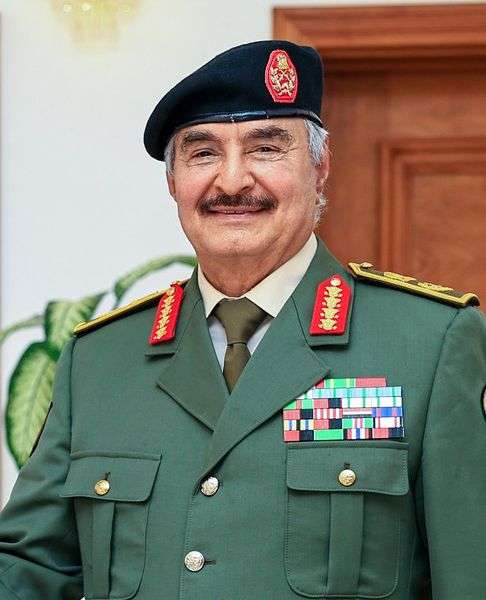
Eastern Libya executes 10 convicted on terrorism charges

DEATH PENALTYAUGUST 21, 2026
Japan: man executed over killing 5 people
DEATH PENALTYAUGUST 15, 2026
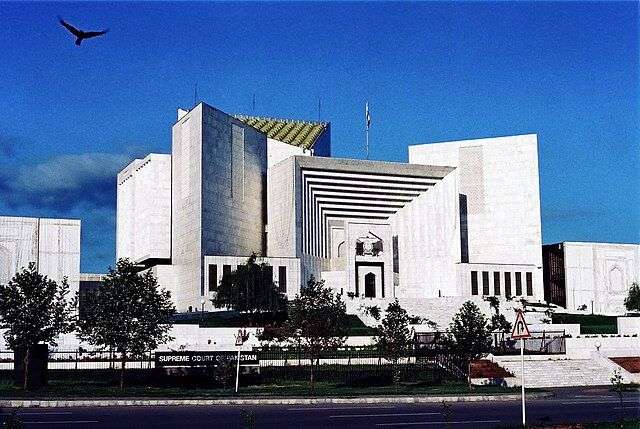
Pakistan: SC upholds death sentence in ex-wife’s murder
DEATH PENALTYAUGUST 14, 2026