
Iran's foreign minister was harangued over human rights...
Iran's foreign minister was harangued over human rights by European parliamentarians and protesters in Brussels, but pleaded for more time to reform a culture deeply rooted in tradition
3 MIN READ
Iran's foreign minister was harangued over human rights by European parliamentarians and protesters in Brussels, but pleaded for more time to reform a culture deeply rooted in tradition.
"The road to reform is not an easy one so we must be patient and realistic, otherwise any hasty decision would undermine the entire process," Kamal Kharrazi told the foreign affairs committee of the European Parliament.
Kharrazi dwelt in a speech on the potential for cooperation with the European Union, which launched trade talks with Iran in December 2002 - the most serious Western attempt to engage the country since the 1979 Islamic revolution.
The initiative distanced the EU from Washington, which has branded Iran part of an "axis of evil" along with Iraq and North Korea. But the EU has made clear that it will seek progress on human rights and terrorism concerns before signing a trade pact.
European deputies quizzed Kharrazi repeatedly on a reported rise in the number of public executions, including stoning, and the forced closure of some newspapers in Iran.
"How is it that you talk so well about human rights and we get more and more reports that the number of executions is increasing?" asked Per Gahrton, a Swedish Green MEP.
"You are still implementing stoning, a mediaeval thing that has nothing to do with religion," he said.
Kharrazi said the government had advised against public executions and stoning had been stopped, but new legislation on these matters was now in the hands of Iran's constitutional watchdog, the Guardian Council.
The council is a 12-man panel of religious jurists with power to veto legislation and election candidates regarded as incompatible with Islamic law. Its decisions can be appealed by the
Expediency Council, which is meant to reconcile and arbitrate on differences among different authorities in Iran.
"There are hopes that at least one of these laws will be passed (in the Guardian Council) and if not there are hopes that they will be passed in the Council of Expediency," Kharrazi said. "The Council of Expediency is not blocking reform."
About 200 supporters of the National Council of Resistance of Iran, an armed opposition group based in Iraq, protested against the minister's visit in a square near parliament with plaques declaring "Kharrazi: spokesman of terror regime".
Their spokesman said the number of announced executions has risen to 474 in 2002 and more went unreported.
Moderate President Mohammad Khatami and his reformist allies have tried to get conservative judges to ban stoning, arguing it tarnishes Iran's image and damages its relationship with the EU.
But differing interpretations of Islamic Sharia law has made the issue so sensitive that the government has appeared wary about making the directive public for fear of a backlash by hardline judges. While stonings are rare, execution by hanging is common for murder, rape, drug smuggling and armed robbery.
"The road to reform is not an easy one so we must be patient and realistic, otherwise any hasty decision would undermine the entire process," Kamal Kharrazi told the foreign affairs committee of the European Parliament.
Kharrazi dwelt in a speech on the potential for cooperation with the European Union, which launched trade talks with Iran in December 2002 - the most serious Western attempt to engage the country since the 1979 Islamic revolution.
The initiative distanced the EU from Washington, which has branded Iran part of an "axis of evil" along with Iraq and North Korea. But the EU has made clear that it will seek progress on human rights and terrorism concerns before signing a trade pact.
European deputies quizzed Kharrazi repeatedly on a reported rise in the number of public executions, including stoning, and the forced closure of some newspapers in Iran.
"How is it that you talk so well about human rights and we get more and more reports that the number of executions is increasing?" asked Per Gahrton, a Swedish Green MEP.
"You are still implementing stoning, a mediaeval thing that has nothing to do with religion," he said.
Kharrazi said the government had advised against public executions and stoning had been stopped, but new legislation on these matters was now in the hands of Iran's constitutional watchdog, the Guardian Council.
The council is a 12-man panel of religious jurists with power to veto legislation and election candidates regarded as incompatible with Islamic law. Its decisions can be appealed by the
Expediency Council, which is meant to reconcile and arbitrate on differences among different authorities in Iran.
"There are hopes that at least one of these laws will be passed (in the Guardian Council) and if not there are hopes that they will be passed in the Council of Expediency," Kharrazi said. "The Council of Expediency is not blocking reform."
About 200 supporters of the National Council of Resistance of Iran, an armed opposition group based in Iraq, protested against the minister's visit in a square near parliament with plaques declaring "Kharrazi: spokesman of terror regime".
Their spokesman said the number of announced executions has risen to 474 in 2002 and more went unreported.
Moderate President Mohammad Khatami and his reformist allies have tried to get conservative judges to ban stoning, arguing it tarnishes Iran's image and damages its relationship with the EU.
But differing interpretations of Islamic Sharia law has made the issue so sensitive that the government has appeared wary about making the directive public for fear of a backlash by hardline judges. While stonings are rare, execution by hanging is common for murder, rape, drug smuggling and armed robbery.
— SOURCES
- (Sources: Reuters, SMCCDI website, 22/01/2003)
KEEP READING
ALL THE NEWS · DEATH PENALTY On the same front
DEATH PENALTYAUGUST 31, 2026
Pakistan: ASI sentenced to death for killing two brothers in Swabi
DEATH PENALTYAUGUST 30, 2026
Pakistan: Man sentenced to death, brother gets life term for double murder in 2021
DEATH PENALTYAUGUST 23, 2026
Eastern Libya executes 10 convicted on terrorism charges

DEATH PENALTYAUGUST 21, 2026
Japan: man executed over killing 5 people
DEATH PENALTYAUGUST 15, 2026
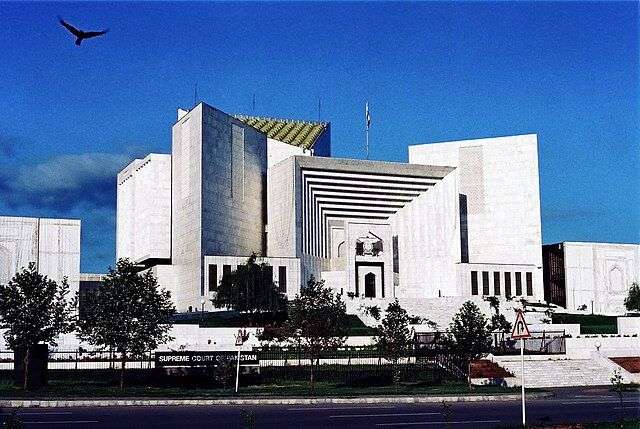
Pakistan: SC upholds death sentence in ex-wife’s murder
DEATH PENALTYAUGUST 14, 2026