
The 1991 penal code based on Sharia law prescribes both the death penalty and corporal punishment.
The 1991 penal code based on Sharia law prescribes both the death penalty and corporal punishment.
8 MIN READ
The 1991 penal code based on Sharia law prescribes both the death penalty and corporal punishment.
The crimes punishable by death are murder, terrorism, armed robbery, rape, drug trafficking, weapons possession and smuggling, treason, acts which may endanger the independence or unity of the state, waging war against the state, apostasy and prostitution.
Retributive crimes (homicide and crimes against any person’s physical integrity) allow for the family of the victim to choose between retribution and blood money. Those considered hudud (crimes against God) are adultery (Zina), use of alcohol, apostasy, defamation regarding chastity, armed robbery and theft of capital.
In accordance with Shari'a law, the Criminal Act provides for physical punishments including flogging, amputation, stonings, and crucifixion – in this case the public display of a body after execution.
Under article 146 of Sudan 's 1991 Penal Code, "Whoever commits the offence of adultery shall be punished with:
a) execution by stoning when the offender is married (muhsan);
b) One hundred lashes of the whip when the offender is not married (non-muhsan);
c) The male non-married offender may be punished, in addition to whipping, with expatriation for one year".
Article 171 of the penal code states that whoever commits theft (alsargha alhadiyha), may be sentenced with amputation of the right hand if the value of the stolen items is equal to or more than the value of 4.25 grams of gold.
These punishments are inconsistent with international human rights law under the International Covenant on Civil and Political Rights (ICCPR) that Sudan has ratified, and the United Nations' Convention against Torture and other Cruel, Inhuman or Degrading Treatment of Punishment (CAT) to which the Government of Sudan is a signatory.
Sudan has an authoritarian government in which all effective political power is in the hands of President Omar Hassan al-Bashir. Bashir who has controlled the Government since he led a military coup in 1989, with the instigation and support of the fundamentalist National Islamic front (NIF).
The country is emerging from a 21-year civil war between the mainly Muslim north and the Animist and Christian south. The conflict is said to have cost the lives of 1.5 million to 2 million people. After two years of talks the government and rebels signed a comprehensive peace deal in January 2005. Under the terms of the 2005 Comprehensive Peace Agreement (CPA), the South was granted regional autonomy along with guaranteed representation in a national power-sharing government. The agreement also provided for a referendum in the south on independence in 2011, in which 99% of southern Sudanese voted to split from Sudan.
The Republic of South Sudan gained independence from Sudan on 9 July 2011, following the January referendum.
But while the government and southern rebels inched closer to peace, fighting broke out in the western region of Darfur in early 2003 when rebels seeking greater autonomy began an insurrection. More than 1.5 million people have fled their homes and tens of thousands of people have been killed. Pro-government Arab militias are accused of carrying out a campaign of ethnic cleansing against non-Arab groups in the region.
In June 2008, Sudan set up special courts in Omdurman and Khartoum with the expressed purpose of handing out justice to Darfur “rebels” for their alleged involvement in the Justice and Equality Movement (JEM) 10 May attacks on the capital’s twin city of Omdurman that killed more than 222 people.
More than 100 JEM rebels received the death penalty for the attacks. However, President Omar al-Bashir later remitted many of the sentences. The death sentences for “terrorism” handed down in the cases of Darfur rebels continued in 2011 and 2012.
Human Rights Watch (HRW) sharply criticized the use of special courts in the Sudan: “they don’t meet even minimal fair trial standards, and yet they have the power to sentence people to death.”
The United Nations voiced concern over trials that sentenced to death alleged Darfur rebels for the attack on the capital and urged Khartoum to abolish capital punishment: “it would appear” that the accused were given access to lawyers only after trials began, and that confessions were extracted while they were held incommunicado and without legal advice.
The International Secretariat of the World organization Against Torture (OMCT) was strongly preoccupied by reports of torture and ill-treatment in detention.
Amnesty International called these trials a “sham”: “Most of those that have been taken before the courts have alleged that they’ve been tortured and that they’ve been forced to confess... and in most cases they’ve actually (first) seen their lawyers on the day of the hearing.”
In 2005, the Security Council handed over responsibility for judging crimes against humanity committed in Darfur to the International Criminal Court (ICC) at The Hague. On 4 March 2009, the ICC issued an arrest warrant for President Omar Al Bashir for war crimes and crimes against humanity for the massacres in Darfur. The accusation of genocide was dismissed. A spokesperson for the ICC, Laurence Blairon, detailed that the arrest warrant regarded five charges of crimes against humanity and two for war crimes, including homicide, extermination, forced migration, torture and rape.
In January 2010, Sudan approved the Child Act of 2010, rising the age at which an offender can face capital punishment from 15 to 18. However, in October 2010, the UN Committee on the Rights of the Child expressed serious concerns that “under article 36 of the Sudan Interim Constitution, the death penalty may be imposed on persons below the age of 18 in cases of retribution or hudud.” In fact, Article 36 (2) of the Interim Constitution, approved on 8 July 2005, states that: “The death penalty shall not be imposed on a person under the age of eighteen or a person who has attained the age of seventy except in cases of retribution or hudud.” This last exception makes the first safeguard almost worthless; for instance hudud crimes include murder and burglary over a certain amount, according to the 1991 Sudanese Penal Code.
Such exceptions in the new constitution contravene the UN Convention on the Rights of the Child, ratified by Sudan, stipulating that capital punishment should not be imposed for offences committed by persons below 18 years of age.
In 2011, death sentences of minors were upheld but not carried out in Sudan, which, in 2009, along with Iran and Saudi Arabia, was one of only three Countries that executed a minor. In May 2009, 19-year-old Abdulrahman Zakaria Mohammed was executed in El Fasher, North Darfur, after he was found guilty of armed robbery and murder two years earlier. On November 29, 2011, seven prisoners in North Darfur had their death sentences upheld by the Special Court in North Darfur. Two of them were under 18 at the time of the alleged crime. They are Abdelrazig Abdessed and Daoud Ibrahim Shareef Youssef, sentenced to death on 21 October 2010 by Judge Shegifa Ali Eshag of the South Darfur Special Criminal Court for alleged membership of the Justice and Equality Movement (JEM) and a carjacking in Khour Baskawit, South Darfur, on 13 May 2010. The Supreme Court in Khartoum had ordered a retrial due to the inclusion of minors in that trial.
According to Amnesty International, at least 19 executions and at least 199 death sentences were reported in 2012. In 2011, there were at least 7 executions and at least 17 death sentences. In 2010, Sudan hanged at least 8 people, while at least 54 were sentenced to death. At least nine people were hanged in 2009, while another five hangings were carried out in 2008.
In May 2011, the UN Human Rights Council under the Universal Periodic Review recommanded Sudan to accede to the Second Optional Protocol to the ICCPR aimed at abolishing the death penalty; to move towards abolition of the death penalty; to establish a moratorium on executions; to commute death sentences to appropriate alternative sanctions; to respect international standards regarding the death penalty, particularly to ensure that it will only be applied to the most severe crimes and to individuals who are more than 18 years of age at the time of the act and to prohibit executions of minors pursuant to the Children’s Act of 2010. Sudan accepted the recommendation to prohibit the application of death penalty on persons below 18 years, but rejected the others, stating that: “In compliance with Sudan’s commitment under the ICCPR the death penalty in Sudanese laws is confined to the most serious crimes. In murder cases there is room for pardoning by the relatives of the deceased and in such case the death penalty will not be imposed.” Sudan also rejected those recommendations calling for the abolition of corporal punishment from the penal code.
On December 20, 2012, Sudan voted against the Resolution on a Moratorium on the Use of the Death Penalty at the UN General Assembly.
The crimes punishable by death are murder, terrorism, armed robbery, rape, drug trafficking, weapons possession and smuggling, treason, acts which may endanger the independence or unity of the state, waging war against the state, apostasy and prostitution.
Retributive crimes (homicide and crimes against any person’s physical integrity) allow for the family of the victim to choose between retribution and blood money. Those considered hudud (crimes against God) are adultery (Zina), use of alcohol, apostasy, defamation regarding chastity, armed robbery and theft of capital.
In accordance with Shari'a law, the Criminal Act provides for physical punishments including flogging, amputation, stonings, and crucifixion – in this case the public display of a body after execution.
Under article 146 of Sudan 's 1991 Penal Code, "Whoever commits the offence of adultery shall be punished with:
a) execution by stoning when the offender is married (muhsan);
b) One hundred lashes of the whip when the offender is not married (non-muhsan);
c) The male non-married offender may be punished, in addition to whipping, with expatriation for one year".
Article 171 of the penal code states that whoever commits theft (alsargha alhadiyha), may be sentenced with amputation of the right hand if the value of the stolen items is equal to or more than the value of 4.25 grams of gold.
These punishments are inconsistent with international human rights law under the International Covenant on Civil and Political Rights (ICCPR) that Sudan has ratified, and the United Nations' Convention against Torture and other Cruel, Inhuman or Degrading Treatment of Punishment (CAT) to which the Government of Sudan is a signatory.
Sudan has an authoritarian government in which all effective political power is in the hands of President Omar Hassan al-Bashir. Bashir who has controlled the Government since he led a military coup in 1989, with the instigation and support of the fundamentalist National Islamic front (NIF).
The country is emerging from a 21-year civil war between the mainly Muslim north and the Animist and Christian south. The conflict is said to have cost the lives of 1.5 million to 2 million people. After two years of talks the government and rebels signed a comprehensive peace deal in January 2005. Under the terms of the 2005 Comprehensive Peace Agreement (CPA), the South was granted regional autonomy along with guaranteed representation in a national power-sharing government. The agreement also provided for a referendum in the south on independence in 2011, in which 99% of southern Sudanese voted to split from Sudan.
The Republic of South Sudan gained independence from Sudan on 9 July 2011, following the January referendum.
But while the government and southern rebels inched closer to peace, fighting broke out in the western region of Darfur in early 2003 when rebels seeking greater autonomy began an insurrection. More than 1.5 million people have fled their homes and tens of thousands of people have been killed. Pro-government Arab militias are accused of carrying out a campaign of ethnic cleansing against non-Arab groups in the region.
In June 2008, Sudan set up special courts in Omdurman and Khartoum with the expressed purpose of handing out justice to Darfur “rebels” for their alleged involvement in the Justice and Equality Movement (JEM) 10 May attacks on the capital’s twin city of Omdurman that killed more than 222 people.
More than 100 JEM rebels received the death penalty for the attacks. However, President Omar al-Bashir later remitted many of the sentences. The death sentences for “terrorism” handed down in the cases of Darfur rebels continued in 2011 and 2012.
Human Rights Watch (HRW) sharply criticized the use of special courts in the Sudan: “they don’t meet even minimal fair trial standards, and yet they have the power to sentence people to death.”
The United Nations voiced concern over trials that sentenced to death alleged Darfur rebels for the attack on the capital and urged Khartoum to abolish capital punishment: “it would appear” that the accused were given access to lawyers only after trials began, and that confessions were extracted while they were held incommunicado and without legal advice.
The International Secretariat of the World organization Against Torture (OMCT) was strongly preoccupied by reports of torture and ill-treatment in detention.
Amnesty International called these trials a “sham”: “Most of those that have been taken before the courts have alleged that they’ve been tortured and that they’ve been forced to confess... and in most cases they’ve actually (first) seen their lawyers on the day of the hearing.”
In 2005, the Security Council handed over responsibility for judging crimes against humanity committed in Darfur to the International Criminal Court (ICC) at The Hague. On 4 March 2009, the ICC issued an arrest warrant for President Omar Al Bashir for war crimes and crimes against humanity for the massacres in Darfur. The accusation of genocide was dismissed. A spokesperson for the ICC, Laurence Blairon, detailed that the arrest warrant regarded five charges of crimes against humanity and two for war crimes, including homicide, extermination, forced migration, torture and rape.
In January 2010, Sudan approved the Child Act of 2010, rising the age at which an offender can face capital punishment from 15 to 18. However, in October 2010, the UN Committee on the Rights of the Child expressed serious concerns that “under article 36 of the Sudan Interim Constitution, the death penalty may be imposed on persons below the age of 18 in cases of retribution or hudud.” In fact, Article 36 (2) of the Interim Constitution, approved on 8 July 2005, states that: “The death penalty shall not be imposed on a person under the age of eighteen or a person who has attained the age of seventy except in cases of retribution or hudud.” This last exception makes the first safeguard almost worthless; for instance hudud crimes include murder and burglary over a certain amount, according to the 1991 Sudanese Penal Code.
Such exceptions in the new constitution contravene the UN Convention on the Rights of the Child, ratified by Sudan, stipulating that capital punishment should not be imposed for offences committed by persons below 18 years of age.
In 2011, death sentences of minors were upheld but not carried out in Sudan, which, in 2009, along with Iran and Saudi Arabia, was one of only three Countries that executed a minor. In May 2009, 19-year-old Abdulrahman Zakaria Mohammed was executed in El Fasher, North Darfur, after he was found guilty of armed robbery and murder two years earlier. On November 29, 2011, seven prisoners in North Darfur had their death sentences upheld by the Special Court in North Darfur. Two of them were under 18 at the time of the alleged crime. They are Abdelrazig Abdessed and Daoud Ibrahim Shareef Youssef, sentenced to death on 21 October 2010 by Judge Shegifa Ali Eshag of the South Darfur Special Criminal Court for alleged membership of the Justice and Equality Movement (JEM) and a carjacking in Khour Baskawit, South Darfur, on 13 May 2010. The Supreme Court in Khartoum had ordered a retrial due to the inclusion of minors in that trial.
According to Amnesty International, at least 19 executions and at least 199 death sentences were reported in 2012. In 2011, there were at least 7 executions and at least 17 death sentences. In 2010, Sudan hanged at least 8 people, while at least 54 were sentenced to death. At least nine people were hanged in 2009, while another five hangings were carried out in 2008.
In May 2011, the UN Human Rights Council under the Universal Periodic Review recommanded Sudan to accede to the Second Optional Protocol to the ICCPR aimed at abolishing the death penalty; to move towards abolition of the death penalty; to establish a moratorium on executions; to commute death sentences to appropriate alternative sanctions; to respect international standards regarding the death penalty, particularly to ensure that it will only be applied to the most severe crimes and to individuals who are more than 18 years of age at the time of the act and to prohibit executions of minors pursuant to the Children’s Act of 2010. Sudan accepted the recommendation to prohibit the application of death penalty on persons below 18 years, but rejected the others, stating that: “In compliance with Sudan’s commitment under the ICCPR the death penalty in Sudanese laws is confined to the most serious crimes. In murder cases there is room for pardoning by the relatives of the deceased and in such case the death penalty will not be imposed.” Sudan also rejected those recommendations calling for the abolition of corporal punishment from the penal code.
On December 20, 2012, Sudan voted against the Resolution on a Moratorium on the Use of the Death Penalty at the UN General Assembly.
KEEP READING
ALL THE NEWS · DEATH PENALTY On the same front
DEATH PENALTYAUGUST 31, 2026
Pakistan: ASI sentenced to death for killing two brothers in Swabi
DEATH PENALTYAUGUST 30, 2026
Pakistan: Man sentenced to death, brother gets life term for double murder in 2021
DEATH PENALTYAUGUST 23, 2026
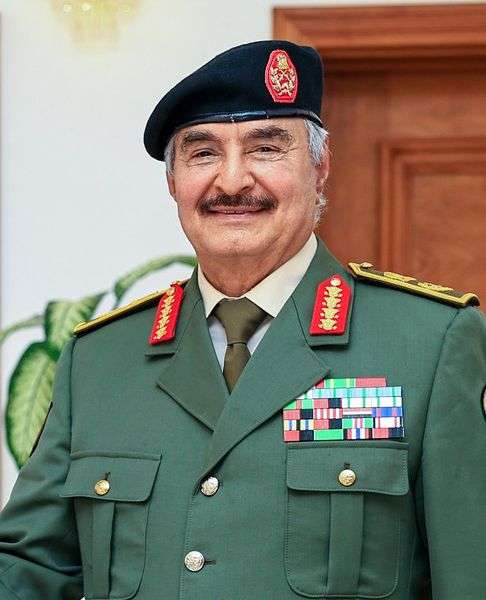
Eastern Libya executes 10 convicted on terrorism charges

DEATH PENALTYAUGUST 21, 2026
Japan: man executed over killing 5 people
DEATH PENALTYAUGUST 15, 2026
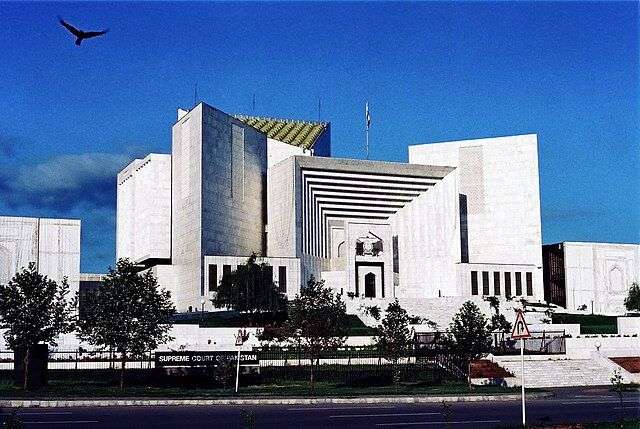
Pakistan: SC upholds death sentence in ex-wife’s murder
DEATH PENALTYAUGUST 14, 2026