
The death penalty is provided for by the Penal Code and by Art. 21 of the Constitution
The death penalty is provided for by the Penal Code and by Art. 21 of the Constitution
24 MIN READ
The death penalty is provided for by the Penal Code and by Art. 21 of the Constitution which states:
"No person may be deprived of their life or personal freedom except in
cases established by law."
In India, death-penalty offences include conspiracy against the Government; desertion or attempted desertion; terrorism; murder or attempted murder; inducement to suicide of a minor or a mentally-retarded person. Section 303 of the Indian Penal Code (IPC) prescribes the death penalty alone with no alternative in cases where a convict serving a life sentence commits murder. The court under this section cannot exercise its discretion and award a lesser sentence.
The death penalty is also applicable under the military statutes (Army Act, 1950, Air Force Act, 1950, Navy Act, 1956).
In 1987 India passed the Commission of Sati Prevention Act which prescribes the death penalty for people found guilty of instigating sati, or sacrificial suicide by the widow, in cases where the suicide is successful.
The December 1988 Narcotic Drugs and Psychotropic Substances Amendment Act makes a second conviction for drug-trafficking a capital offence. On 16 June 2011, the Bombay High Court, one of the oldest and chartered High Courts in India, struck down the mandatory death penalty for drug offences. Announcing the order via video conferencing, a division bench of Justices A.M Khanwilkar and A.P Bhangale declared Section 31A of the Narcotic Drugs and Psychotropic Substances Act, 1985 (NDPS Act), that imposes a mandatory death sentence for a subsequent conviction for drug trafficking, ‘unconstitutional’. The Court, however, refrained from striking down the law, preferring to read it down instead. Consequently, the sentencing Court will have the option, and not the obligation, to impose capital punishment on a person convicted a second time for drugs in quantities specified under Section 31A. It should be noted however that only on 28 January 2012, in the first case ever of capital punishment in a drug crime, a special Narcotics court in Chandigarh, awarded death penalty to a person while sentencing an African national to 15-years of Rigorous Imprisonment (RI).
On 7 March 2014, India replaced the mandatory death penalty in the Narcotic Drugs and Psychotropic Substances Act with an optional death sentence, following the 2011 Maharashtra High Court ruling in India Harm Reduction Network vs Union of India, in which the mandatory death penalty for repeat offenders under section 31A of the Narcotic Drugs and Psychotropic Substances Act, 1985, was declared unconstitutional.
Special courts applying the Terrorist Affected Areas Special Courts Act, 1984, and the Prevention of Terrorism Act (POTA), 2002, were empowered to impose the death sentence for terrorism. The latter law, which has broadened the scope of the death penalty, when the Hindu nationalist BJP was in government and after an attack on the Indian Parliament in December 2001, was considered as contrary to human and political rights by the government, dominated by the Party of Congress of Sonia Gandhi, after achieving victory in the elections of May 2004. This law was repealed by the Parliament on December 9, 2004 by voice vote amidst a walkout by the Bharatiya Janata Party (BJP), the main opposition party. Under the same considerations of national security, the POTA was replaced by the Unlawful Activities (Prevention) Bill, which amended the Unlawful Activities (Prevention) Act, 1967 to cover terrorism. The Bill provides that people convicted of terrorism will be punishable by the death penalty or life imprisonment and a fine for any act which results in loss of life. Under the Bill, anyone threatening unity, integrity, security or sovereignty or striking terror in the people in India or in any foreign Country by using bombs, dynamite or other explosive or inflammable substances or firearms or other lethal weapons causing or likely to cause death is liable for punishment.
The fight against terrorism was behind a bilateral extradition treaty between India and France signed in January 2003. The treaty involved Indian assurances that criminals would not be given capital punishment upon extradition from France.
On 21 December 2011, in an effort to secure the strategically important oil pipelines from acts of terrorism like sabotage, Parliament gave assent to death penalty for such crimes by amending the Petroleum and Minerals Pipelines (Acquisition of Right of User in Land) Amendment, Bill 2011. The punishment “may extend to imprisonment for life or death” in case the act of sabotage is dangerous and is likely to cause death of any other person, the amendment Bill states. Prior to the amendment, the Act provided for a jail term of one to three years’ for acts of sabotage and pilferage.
On 1 February 2012, the Supreme Court held that Section 27(3) of the Arms Act, 1959 that provides for “mandatory death penalty” in case of death being caused by use of prohibited arms is ultra vires (beyond the powers) of the constitution and declared it void. The provision of death sentence was inserted in Section 27 of the Arms Act by amending it in 1988 in the wake of terrorist and anti-national activities in Punjab. Prior to the amendment, the maximum sentence under this section was seven years or fine or both.
On April 5, 2013, Indian President Pranab Mukherjee gave his assent to the anti-rape bill which details life prison terms and even death sentences for rape convicts, as well as stringent punishments for such offenses as acid attacks, stalking and voyeurism. Mukherjee accorded his assent to the Criminal Law (Amendment) Bill-2013 on Tuesday (April 2), brought against the backdrop of the country-wide outrage over the Delhi gang rape, when a 23-year-old woman was savagely raped and attacked by six men in a bus on 16 December 2012 in Delhi and died nearly two weeks later. The law, passed by the Lok Sabha (Lower House) on March 19 and by the Rajya Sabha (Upper House) on March 21, has replaced an ordinance promulgated on February 3. It amends various sections of the Indian Penal Code, the Code of Criminal Procedure, the Indian Evidence Act and the Protection of Children from Sexual Offences Act. With an aim of providing a strong deterrent against crimes such as rape, the new law states that an offender can be sentenced to rigorous imprisonment for a term which cannot be less than 20 years but which may extend to life, meaning imprisonment for the remainder of the convict's life, and a fine. It has provisions for handing out death sentence to offenders who may have been convicted previously for such crimes. The law, for the first time, defines stalking and voyeurism as non-bailable offences if repeated for a second time. Perpetrators of acid attacks will attract a 10-year jail sentence.
It also defines acid attacks as a crime, and it grants a victim the right to self-defense. It also has provisions for imposing a minimum 10-year jail term for perpetrators of such acts. The law has fixed the age for consensual sex at 18 years. New sections to prevent stalking and voyeurism were introduced following a strong demand from women's organizations.
On 3 February 2013, President Pranab Mukherjee gave his assent to the anti-rape law ordinance after cabinet ministers recommended changes to impose harsher punishments for rapists, including the death penalty. "The President has given his assent to the Criminal Law (Amendment) Ordinance 2013," a Home Ministry spokesperson said. "It comes into effect immediately but it will also be tabled before the Parliament," added a senior officer in the president's office. On 2 February, a government-appointed panel of jurists – Justice JS Verma Committee – and the cabinet had recommended tougher laws, as a response to the gang-rape tragedy that took place in New Delhi. There were vociferous demands for death penalty, but the Verma Committee excluded it. The committee had proposed to replace the word 'rape' with 'sexual assault', which would also help to expand the definition of all types of sexual crimes against women. It also proposed enhanced punishment for other crimes against women like stalking, voyeurism, acid attacks, indecent gestures like words and inappropriate touch and brings into its ambit 'marital rape'. In the existing law, a rapist faces a term of 7 to 10 years. Under the changes, the minimum sentence for gang-rape, rape of a minor, rape by policemen or a person in authority will be doubled to 20 years from 10 and can be extended to life without parole. The government went beyond the committee's recommendations and introduced death penalty for the accused if the victim died or fell into vegetative state. Repeat offenders of sexual assault by gang will be punished by imprisonment for life or with death.
Death sentences must be confirmed by the Supreme Court, which itself ruled on 9 May 1980, in the landmark judgment “Bachan Singh v State of Punjab” that the death sentence as a punishment should be given only in the “rarest of rare” cases. On 11 August 2008, in the case of Murli Manohar Mishra alias Swami Shraddhananda, the Indian Supreme Court ruled that, in order to minimize the use of death penalty, the Court had the power to fix tenure of life imprisonment while substituting it for death sentence. The high court in its judgment noted, “further formalization of a special category of sentence, though for an extremely few number of cases, shall have the great advantage of having the death penalty on the statute book but to actually use it as little as possible, really in the rarest of the rare cases.”
On 18 August 2009, the Supreme Court, in a case in which the high court awarded a life sentence to four members of a gang responsible for killing three “Shiv Sena” workers in Mumbai in March 1999, expressed its concern by the varying interpretation of the “rarest of rare case” guidelines laid down in Bachan Singh judgment and said the time had come for an attempt towards deciphering a common view on this to usher in “some objectivity to the precedent on death penalty which is crumbling down under the weight of disparate interpretations.”
On 10 February 2010, the Supreme Court held that long incarceration and socio-economic factors leading to crime are relevant and mitigating considerations for commuting a death sentence to life imprisonment.
On 20 November 2012, in the case of Sangeet & Anr versus State of Haryana, the Supreme Court said its Constitution bench's landmark judgement of 1980 on the criterion for imposing death penalty needed a "fresh look" as there had been "no uniformity" in following its principles on what constituted "the rarest of rare" cases.
The Indian legislative system provides for different levels of appeal, and death sentences are frequently commuted to life imprisonment upon appeal. India keeps no official statistics on the number of death sentences and executions, nor on the number of people on death row. The President has also the power to issue pardons. Article 72 of the Constitution empowers the President to pardon, grant reprieve or suspend, remit, commute sentence of a person convicted for any offence. The President is guided in his decision and advised by the home minister and the council of ministers. There is no timeframe in which the President has to make the decision which is subject to judicial review after the India’s Supreme Court decision of October 11, 2006 that clipped the president’s power to pardon convicts on death row. Powers to grant pardon were subject to judicial review if there was an “extraneous consideration in the exercise of that power,” the court ruled.
President Pratibha Devisingh Patil, who ended his term in June 2012, was the most “merciful” of all presidents during the last three decades as she commuted death sentences of 38 petitioners to life imprisonment during her tenure. During her mandate, she rejected 5 petitions. The move by Patil did not see any protest from government quarters. The Indian media, however, has generally been critical of her record on the issue, questioning why clemency was deemed appropriate in some cases involving murder, rape and child abduction.
On 22 July 2012, Pranab Mukherjee, a veteran from the ruling Congress Party, was elected as the 13th President of India. Mukherjee’s decisions on mercy pleas appeared in sharp contrast to those of his predecessor Pratibha Patil. In his two-year tenure, as of 31 August 2014, President Mukherjee has rejected 97% of the mercy petitions. Mukherjee considered 23 mercy pleas involving 31 death-row convicts out of which only one was granted mercy.
On 30 April 2013, the Supreme Court commuted the death sentence of murder convict Mahendra Nath Das to life sentence on the grounds that the President’s office took too long to reject his petition seeking mercy. Mahendra Nath Das was convicted in two murder cases in Assam. He killed a man, Rajen Das, in Guwahati in 1990 and surrendered. In April 1996, MN Das beheaded Harakanta Das at Fancy Bazaar in Guwahati while he was out on bail and surrendered with the victim’s head. Das was sentenced to death in 1997. The penalty was confirmed by the Gauhati High Court in February 1998. Subsequently, Mahendra Das’ family moved a mercy petition to the then President KR Narayanan in 1999 but the plea was finally turned down in May 2011 by the then President Pratibha Devisingh Patil. Das then filed a written petition pleading for commuting the death sentence to life imprisonment since he had already spent about 12 years in jail during the disposal of his petition seeking presidential clemency. Das had even gone a fast unto death in 2010 in protest against the delay of the President’s decision on his mercy plea.
On 5 November 2013, the Supreme Court ruled that courts should record “special reasons” while awarding death penalty and “must” take into account the crime and the character of the criminal, which should reflect “extreme depravity” to deserve such a punishment. A bench of justices AK Patnaik and Gyan Sudha Misra found fault with the trial court order sending convicts to the gallows, saying the “special reasons” noted by it do not make it a rarest of rare case. “…For awarding death sentence, special reasons have to be recorded as provided in Section 354(3) of the Code of Criminal Procedure, and while recording such special reasons, the court must pay due regard both to the crime and the criminal,” the bench said, adding that “there are materials to show that the crime committed by respondents, both rape and murder of the deceased, were cruel, but there were no materials to establish that the character of the respondents was of extreme depravity so as to make them liable for the punishment of death.” “In our view, the reasons given by the trial court do not make out the case to be a rarest of rare cases in which death sentence could be awarded to the respondents,” the Court said, awarding rigorous life imprisonment to convicts, Ram Niwas and Balveer, for strangulating the victim on the night of 1 November 2003.
On 21 January 2014, in a landmark and significant judgement, the Supreme Court has once again restricted the scope of death penalty in the country. This time by commuting the death penalty of 15 murder convicts to life term on the ground of inordinate delay in deciding their mercy pleas and mental illness. While the death penalty of 13 convicts was commuted to life on the ground of “unexplained and unreasonable delay” by the authorities in deciding on their petitions for mercy , two others were given life sentence when they became mentally ill after several years on death row. The court also ruled that a death row convict must be hanged within 14 days after dismissal of his/her mercy petition and a final meeting between the prisoner and their family and friends should be facilitated. Ruling that death row convicts and their families must be informed after their mercy plea is rejected by the President or the Governor, the apex court said, “Once the mercy plea has been rejected, it should be communicated in writing.” The apex court said schizophrenia, insanity and mental illness can be reasons for commuting death penalty and the convicts should have regular mental health checks and appropriate medical care should be given to those in need. Besides persons sentenced to death are entitled to legal aid, including for filing mercy petition. The order also said that solitary confinement of a death row convict and other prisoners is unconstitutional. On 12 March 2014, the Supreme Court dismissed the Centre’s plea seeking review of its verdict. The apex court rejected the Centre’s contention that the 21 January judgment was “patently illegal and suffers from errors apparent.”
On 2 September 2014, the Supreme Court of India ruled that review petitions against verdicts upholding death sentences in the future will be heard by a three-judge bench in open court. A five-judge Constitution bench – by a majority verdict of four to one – said that a three-judge bench would hear review petitions for a maximum of 30 minutes in all death sentence cases. Death cases in which review petition have been dismissed, but execution has not taken place, can be reopened and heard by a bench of three judges. However, the apex court ruled that this was not applicable in cases where curative petition had been dismissed. The apex court passed the order on a batch of petitions filed by six death convicts pleading the court that their review pleas should have been decided in open court hearing. Earlier, in most cases, review petitions were decided in judges' chambers and the parties were not allowed to be present.
On 26 September 2014, in its report, “India: Death Without the Right to Appeal”, Asian Centre for Human Rights (ACHR) stated that India was not complying with the “United Nations safeguards guaranteeing protection of the rights of those facing the death penalty” which provide that “Anyone sentenced to death shall have the right to appeal to a court of higher jurisdiction.” Many death row convicts are being denied the right to appeal to a court of higher jurisdiction with the Supreme Court setting aside acquittal by the High Courts and restoring death penalty imposed by the trial courts, and enhancing lesser sentences of life imprisonment awarded by the High Courts to death penalty. Further, with respect to offences under the Terrorists and Disruptive Activities (Prevention) Act (TADA), the Supreme Court being the appellate court against the orders of the designated TADA courts, the convicts under the TADA are denied the right to appeal before the High Courts as available to those convicted under the Indian Penal Code offences. The Supreme Court also directs for fresh consideration by the High Courts in some cases where death penalty was not imposed. This is nothing but the apex court influencing the decisions of the lower courts in favour of death penalty. ACHR stated that the Review Petition which can be filed against the orders of the Supreme Court cannot be considered as an appeal “to a court of higher jurisdiction” as provided in the United Nations safeguards guaranteeing protection of the rights of those facing the death penalty. A review petition is filed to the same Bench of Judges which delivered the judgment or order sought to be reviewed. Even a Curative Petition filed before the Supreme Court after dismissal of a Review Petition cannot be considered as an appeal to a court of higher jurisdiction as provided under "the United Nations safeguards guaranteeing protection of the rights of those facing the death penalty" because of its very restrictive scope. A curative petition is an exception and can be filed only if a Senior Advocate certifies that it meets the requirements of filing curative petition stipulated by the Supreme Court.
India resumed executions in 2012 after a de facto moratorium dating back to 2004. It was the first time a capital sentence had been carried out in India since 14 August 2004, when Dhananjoy Chatterjee was hanged for raping and killing a girl.
On 21 November 2012, Mohammad Ajmal Kasab, a 25 year old Pakistan national, the lone survivor of a militant squad that killed 166 people in a rampage through the financial capital Mumbai in November 2008, was hanged in secrecy at 7:30 a.m. at Yerwada Jail in Pune in Pune, a city near Mumbai, after Indian President Pranab Mukherjee rejected his plea for mercy. He was buried inside the prison where he was hanged, officials said. Indian authorities faced public pressure to quickly execute Kasab, and the government fast-tracked the appeal and execution process, which often can take years, or in some cases, decades.
Secret executions of death row prisoners are increasingly becoming the order of the day in India, after the executions of November 2012 and February 2013, which were shrouded in secrecy and ended a de facto moratorium dating back to 2004. The use of these covert tactics is intended to keep a lid, at least until the execution takes place, on expected repercussions and protests, and – most significantly – foreclose the opportunity of moving a court seeking a stay order for the execution.
Statistics on executions in India since 1947 are not available. The Government of India treats information on death penalty as a State secret.
According to the 35th Report relating to “Capital Punishment” of the Law Commission of India, which works as an advisory body to the Ministry of Law and Justice, a total of 1,410 death row convicts were executed in various states during 1953-1963 alone. The Report however did not cover States such as Assam, Jammu and Kashmir, Rajasthan and Delhi and the figures are therefore not accurate. There is also no information concerning executions from 1964 to 1994 in addition to those prior to 1953. The National Crime Records Bureau started collecting information on death penalty only from 1995 and as per the NCRB, a total of 21 condemned prisoners have been executed since 1995.
On 23 May 2014, the Commission called for a reassessment of the need for the death penalty. In a consultation paper, the Commission said: “At this juncture, an exhaustive study on the subject would be a useful and salutary contribution to the cause of public debate on this issue. Such a study will also provide a definitive research-backed orientation to the lawmakers and judges on this very contentious issue.” The Commission said the study would have to address queries and concerns of Courts and present an international perspective on the issue, stating that it was aware of the United Nations resolution of 2007 urging a moratorium on executions with a view to abolish the death penalty. The Commission has allowed 30 days for the public to submit their responses.
The National Crimes Record Bureau (NCRB) statistics reveal that 1,612 persons were sentenced to death by Indian courts between 2001 and 2012. The analysis also showed that in the same period death penalties to 4,382 people were commuted to life imprisonment by higher courts, an indication that trial courts were liberal in awarding the death sentence. In spite of so many death sentences passed by Indian courts, nearly 99 per cent convicts never face the gallows. In fact, India has executed only 4 people in the last 20 years: “Auto” Shankar in 1995, Dhananjoy Chatterjee in 2004, Ajmal Kasab in 2012 and Afzal Guru in 2013.
The last reported executions prior to the August 2004 one had taken place in 1995, when five people were hanged. A well-remembered execution was that of Nathuram Godse, the man condemned for assassinating India’s founding father Mahatma Gandhi. It took him 15 minutes to die as he dangled from the rope. A similar fate, in 1989, awaited Kehar Singh and Satwant Singh, convicted of the 1985 assassination of Prime Minister Indira Gandhi.
Mahatma Gandhi had been a firm opponent of the death penalty. “I cannot in all conscience agree to anyone being sent to the gallows. God alone can take life because he alone gives it.”
At least 78 new death sentences were imposed in 2012, according to Amnesty International.
However, in the aftermath of the Delhi gang-rape in December 2012, the number of death sentences pronounced by the lower courts has grown remarkably. Courts in western Odisha have sentenced at least five persons to death for rape and murder. In the last nine months, courts in Bihar have sentenced 4 to death; Jharkhand 2, Punjab 3, and Madhya Pradesh 12.
As of 31 March 2013, there were 404 convicts on death row in various prisons across the country.
Some 278 people were on death row at the end of 2014, according to the Death Penalty Research Project of the National Law University in Delhi.
At least 64 new death sentences were imposed in 2014, compared to at least 75 issued in 2013, at least 97 awarded in 2012 and 177 in 2011. However, 2007 saw the highest of 186 death sentences.
The death penalty has failed to act as a deterrent in the country and the high number of death sentences has not brought down crime rate, the Asian Centre for Human Rights (ACHR) said in its report titled “India: Death penalty has no deterrence” published on 1 September 2014. On the contrary, the report said, there was a drastic fall in murder cases following a considerable reduction in executions since 1982 when the Supreme Court propounded the "rarest of the rare doctrine" for awarding the death penalty. "Death penalty can never be a substitute to prevention, effective and prompt investigation and speedy justice delivery system against crimes on which the government of India has failed," said ACHR Director Suhas Chakma, who is also coordinator of the national campaign for abolition of death penalty in India. Even inclusion of death penalty for repeat offenders of rape has not reduced non-homicidal offences such as rape, and the award of the death penalty in September 2013 to four adult defendants found guilty of rape and murder in the December 2012 Delhi gang-rape failed to act as a deterrent, the ACHR report added. According to Delhi police data, 616 rape cases were registered in Delhi from 1 January 2014 to 30 April 2014, an average of six cases per day.
On December 18, 2014, India voted against the Resolution on a Moratorium on the Use of the Death Penalty at the UN General Assembly.
In India, death-penalty offences include conspiracy against the Government; desertion or attempted desertion; terrorism; murder or attempted murder; inducement to suicide of a minor or a mentally-retarded person. Section 303 of the Indian Penal Code (IPC) prescribes the death penalty alone with no alternative in cases where a convict serving a life sentence commits murder. The court under this section cannot exercise its discretion and award a lesser sentence.
The death penalty is also applicable under the military statutes (Army Act, 1950, Air Force Act, 1950, Navy Act, 1956).
In 1987 India passed the Commission of Sati Prevention Act which prescribes the death penalty for people found guilty of instigating sati, or sacrificial suicide by the widow, in cases where the suicide is successful.
The December 1988 Narcotic Drugs and Psychotropic Substances Amendment Act makes a second conviction for drug-trafficking a capital offence. On 16 June 2011, the Bombay High Court, one of the oldest and chartered High Courts in India, struck down the mandatory death penalty for drug offences. Announcing the order via video conferencing, a division bench of Justices A.M Khanwilkar and A.P Bhangale declared Section 31A of the Narcotic Drugs and Psychotropic Substances Act, 1985 (NDPS Act), that imposes a mandatory death sentence for a subsequent conviction for drug trafficking, ‘unconstitutional’. The Court, however, refrained from striking down the law, preferring to read it down instead. Consequently, the sentencing Court will have the option, and not the obligation, to impose capital punishment on a person convicted a second time for drugs in quantities specified under Section 31A. It should be noted however that only on 28 January 2012, in the first case ever of capital punishment in a drug crime, a special Narcotics court in Chandigarh, awarded death penalty to a person while sentencing an African national to 15-years of Rigorous Imprisonment (RI).
On 7 March 2014, India replaced the mandatory death penalty in the Narcotic Drugs and Psychotropic Substances Act with an optional death sentence, following the 2011 Maharashtra High Court ruling in India Harm Reduction Network vs Union of India, in which the mandatory death penalty for repeat offenders under section 31A of the Narcotic Drugs and Psychotropic Substances Act, 1985, was declared unconstitutional.
Special courts applying the Terrorist Affected Areas Special Courts Act, 1984, and the Prevention of Terrorism Act (POTA), 2002, were empowered to impose the death sentence for terrorism. The latter law, which has broadened the scope of the death penalty, when the Hindu nationalist BJP was in government and after an attack on the Indian Parliament in December 2001, was considered as contrary to human and political rights by the government, dominated by the Party of Congress of Sonia Gandhi, after achieving victory in the elections of May 2004. This law was repealed by the Parliament on December 9, 2004 by voice vote amidst a walkout by the Bharatiya Janata Party (BJP), the main opposition party. Under the same considerations of national security, the POTA was replaced by the Unlawful Activities (Prevention) Bill, which amended the Unlawful Activities (Prevention) Act, 1967 to cover terrorism. The Bill provides that people convicted of terrorism will be punishable by the death penalty or life imprisonment and a fine for any act which results in loss of life. Under the Bill, anyone threatening unity, integrity, security or sovereignty or striking terror in the people in India or in any foreign Country by using bombs, dynamite or other explosive or inflammable substances or firearms or other lethal weapons causing or likely to cause death is liable for punishment.
The fight against terrorism was behind a bilateral extradition treaty between India and France signed in January 2003. The treaty involved Indian assurances that criminals would not be given capital punishment upon extradition from France.
On 21 December 2011, in an effort to secure the strategically important oil pipelines from acts of terrorism like sabotage, Parliament gave assent to death penalty for such crimes by amending the Petroleum and Minerals Pipelines (Acquisition of Right of User in Land) Amendment, Bill 2011. The punishment “may extend to imprisonment for life or death” in case the act of sabotage is dangerous and is likely to cause death of any other person, the amendment Bill states. Prior to the amendment, the Act provided for a jail term of one to three years’ for acts of sabotage and pilferage.
On 1 February 2012, the Supreme Court held that Section 27(3) of the Arms Act, 1959 that provides for “mandatory death penalty” in case of death being caused by use of prohibited arms is ultra vires (beyond the powers) of the constitution and declared it void. The provision of death sentence was inserted in Section 27 of the Arms Act by amending it in 1988 in the wake of terrorist and anti-national activities in Punjab. Prior to the amendment, the maximum sentence under this section was seven years or fine or both.
On April 5, 2013, Indian President Pranab Mukherjee gave his assent to the anti-rape bill which details life prison terms and even death sentences for rape convicts, as well as stringent punishments for such offenses as acid attacks, stalking and voyeurism. Mukherjee accorded his assent to the Criminal Law (Amendment) Bill-2013 on Tuesday (April 2), brought against the backdrop of the country-wide outrage over the Delhi gang rape, when a 23-year-old woman was savagely raped and attacked by six men in a bus on 16 December 2012 in Delhi and died nearly two weeks later. The law, passed by the Lok Sabha (Lower House) on March 19 and by the Rajya Sabha (Upper House) on March 21, has replaced an ordinance promulgated on February 3. It amends various sections of the Indian Penal Code, the Code of Criminal Procedure, the Indian Evidence Act and the Protection of Children from Sexual Offences Act. With an aim of providing a strong deterrent against crimes such as rape, the new law states that an offender can be sentenced to rigorous imprisonment for a term which cannot be less than 20 years but which may extend to life, meaning imprisonment for the remainder of the convict's life, and a fine. It has provisions for handing out death sentence to offenders who may have been convicted previously for such crimes. The law, for the first time, defines stalking and voyeurism as non-bailable offences if repeated for a second time. Perpetrators of acid attacks will attract a 10-year jail sentence.
It also defines acid attacks as a crime, and it grants a victim the right to self-defense. It also has provisions for imposing a minimum 10-year jail term for perpetrators of such acts. The law has fixed the age for consensual sex at 18 years. New sections to prevent stalking and voyeurism were introduced following a strong demand from women's organizations.
On 3 February 2013, President Pranab Mukherjee gave his assent to the anti-rape law ordinance after cabinet ministers recommended changes to impose harsher punishments for rapists, including the death penalty. "The President has given his assent to the Criminal Law (Amendment) Ordinance 2013," a Home Ministry spokesperson said. "It comes into effect immediately but it will also be tabled before the Parliament," added a senior officer in the president's office. On 2 February, a government-appointed panel of jurists – Justice JS Verma Committee – and the cabinet had recommended tougher laws, as a response to the gang-rape tragedy that took place in New Delhi. There were vociferous demands for death penalty, but the Verma Committee excluded it. The committee had proposed to replace the word 'rape' with 'sexual assault', which would also help to expand the definition of all types of sexual crimes against women. It also proposed enhanced punishment for other crimes against women like stalking, voyeurism, acid attacks, indecent gestures like words and inappropriate touch and brings into its ambit 'marital rape'. In the existing law, a rapist faces a term of 7 to 10 years. Under the changes, the minimum sentence for gang-rape, rape of a minor, rape by policemen or a person in authority will be doubled to 20 years from 10 and can be extended to life without parole. The government went beyond the committee's recommendations and introduced death penalty for the accused if the victim died or fell into vegetative state. Repeat offenders of sexual assault by gang will be punished by imprisonment for life or with death.
Death sentences must be confirmed by the Supreme Court, which itself ruled on 9 May 1980, in the landmark judgment “Bachan Singh v State of Punjab” that the death sentence as a punishment should be given only in the “rarest of rare” cases. On 11 August 2008, in the case of Murli Manohar Mishra alias Swami Shraddhananda, the Indian Supreme Court ruled that, in order to minimize the use of death penalty, the Court had the power to fix tenure of life imprisonment while substituting it for death sentence. The high court in its judgment noted, “further formalization of a special category of sentence, though for an extremely few number of cases, shall have the great advantage of having the death penalty on the statute book but to actually use it as little as possible, really in the rarest of the rare cases.”
On 18 August 2009, the Supreme Court, in a case in which the high court awarded a life sentence to four members of a gang responsible for killing three “Shiv Sena” workers in Mumbai in March 1999, expressed its concern by the varying interpretation of the “rarest of rare case” guidelines laid down in Bachan Singh judgment and said the time had come for an attempt towards deciphering a common view on this to usher in “some objectivity to the precedent on death penalty which is crumbling down under the weight of disparate interpretations.”
On 10 February 2010, the Supreme Court held that long incarceration and socio-economic factors leading to crime are relevant and mitigating considerations for commuting a death sentence to life imprisonment.
On 20 November 2012, in the case of Sangeet & Anr versus State of Haryana, the Supreme Court said its Constitution bench's landmark judgement of 1980 on the criterion for imposing death penalty needed a "fresh look" as there had been "no uniformity" in following its principles on what constituted "the rarest of rare" cases.
The Indian legislative system provides for different levels of appeal, and death sentences are frequently commuted to life imprisonment upon appeal. India keeps no official statistics on the number of death sentences and executions, nor on the number of people on death row. The President has also the power to issue pardons. Article 72 of the Constitution empowers the President to pardon, grant reprieve or suspend, remit, commute sentence of a person convicted for any offence. The President is guided in his decision and advised by the home minister and the council of ministers. There is no timeframe in which the President has to make the decision which is subject to judicial review after the India’s Supreme Court decision of October 11, 2006 that clipped the president’s power to pardon convicts on death row. Powers to grant pardon were subject to judicial review if there was an “extraneous consideration in the exercise of that power,” the court ruled.
President Pratibha Devisingh Patil, who ended his term in June 2012, was the most “merciful” of all presidents during the last three decades as she commuted death sentences of 38 petitioners to life imprisonment during her tenure. During her mandate, she rejected 5 petitions. The move by Patil did not see any protest from government quarters. The Indian media, however, has generally been critical of her record on the issue, questioning why clemency was deemed appropriate in some cases involving murder, rape and child abduction.
On 22 July 2012, Pranab Mukherjee, a veteran from the ruling Congress Party, was elected as the 13th President of India. Mukherjee’s decisions on mercy pleas appeared in sharp contrast to those of his predecessor Pratibha Patil. In his two-year tenure, as of 31 August 2014, President Mukherjee has rejected 97% of the mercy petitions. Mukherjee considered 23 mercy pleas involving 31 death-row convicts out of which only one was granted mercy.
On 30 April 2013, the Supreme Court commuted the death sentence of murder convict Mahendra Nath Das to life sentence on the grounds that the President’s office took too long to reject his petition seeking mercy. Mahendra Nath Das was convicted in two murder cases in Assam. He killed a man, Rajen Das, in Guwahati in 1990 and surrendered. In April 1996, MN Das beheaded Harakanta Das at Fancy Bazaar in Guwahati while he was out on bail and surrendered with the victim’s head. Das was sentenced to death in 1997. The penalty was confirmed by the Gauhati High Court in February 1998. Subsequently, Mahendra Das’ family moved a mercy petition to the then President KR Narayanan in 1999 but the plea was finally turned down in May 2011 by the then President Pratibha Devisingh Patil. Das then filed a written petition pleading for commuting the death sentence to life imprisonment since he had already spent about 12 years in jail during the disposal of his petition seeking presidential clemency. Das had even gone a fast unto death in 2010 in protest against the delay of the President’s decision on his mercy plea.
On 5 November 2013, the Supreme Court ruled that courts should record “special reasons” while awarding death penalty and “must” take into account the crime and the character of the criminal, which should reflect “extreme depravity” to deserve such a punishment. A bench of justices AK Patnaik and Gyan Sudha Misra found fault with the trial court order sending convicts to the gallows, saying the “special reasons” noted by it do not make it a rarest of rare case. “…For awarding death sentence, special reasons have to be recorded as provided in Section 354(3) of the Code of Criminal Procedure, and while recording such special reasons, the court must pay due regard both to the crime and the criminal,” the bench said, adding that “there are materials to show that the crime committed by respondents, both rape and murder of the deceased, were cruel, but there were no materials to establish that the character of the respondents was of extreme depravity so as to make them liable for the punishment of death.” “In our view, the reasons given by the trial court do not make out the case to be a rarest of rare cases in which death sentence could be awarded to the respondents,” the Court said, awarding rigorous life imprisonment to convicts, Ram Niwas and Balveer, for strangulating the victim on the night of 1 November 2003.
On 21 January 2014, in a landmark and significant judgement, the Supreme Court has once again restricted the scope of death penalty in the country. This time by commuting the death penalty of 15 murder convicts to life term on the ground of inordinate delay in deciding their mercy pleas and mental illness. While the death penalty of 13 convicts was commuted to life on the ground of “unexplained and unreasonable delay” by the authorities in deciding on their petitions for mercy , two others were given life sentence when they became mentally ill after several years on death row. The court also ruled that a death row convict must be hanged within 14 days after dismissal of his/her mercy petition and a final meeting between the prisoner and their family and friends should be facilitated. Ruling that death row convicts and their families must be informed after their mercy plea is rejected by the President or the Governor, the apex court said, “Once the mercy plea has been rejected, it should be communicated in writing.” The apex court said schizophrenia, insanity and mental illness can be reasons for commuting death penalty and the convicts should have regular mental health checks and appropriate medical care should be given to those in need. Besides persons sentenced to death are entitled to legal aid, including for filing mercy petition. The order also said that solitary confinement of a death row convict and other prisoners is unconstitutional. On 12 March 2014, the Supreme Court dismissed the Centre’s plea seeking review of its verdict. The apex court rejected the Centre’s contention that the 21 January judgment was “patently illegal and suffers from errors apparent.”
On 2 September 2014, the Supreme Court of India ruled that review petitions against verdicts upholding death sentences in the future will be heard by a three-judge bench in open court. A five-judge Constitution bench – by a majority verdict of four to one – said that a three-judge bench would hear review petitions for a maximum of 30 minutes in all death sentence cases. Death cases in which review petition have been dismissed, but execution has not taken place, can be reopened and heard by a bench of three judges. However, the apex court ruled that this was not applicable in cases where curative petition had been dismissed. The apex court passed the order on a batch of petitions filed by six death convicts pleading the court that their review pleas should have been decided in open court hearing. Earlier, in most cases, review petitions were decided in judges' chambers and the parties were not allowed to be present.
On 26 September 2014, in its report, “India: Death Without the Right to Appeal”, Asian Centre for Human Rights (ACHR) stated that India was not complying with the “United Nations safeguards guaranteeing protection of the rights of those facing the death penalty” which provide that “Anyone sentenced to death shall have the right to appeal to a court of higher jurisdiction.” Many death row convicts are being denied the right to appeal to a court of higher jurisdiction with the Supreme Court setting aside acquittal by the High Courts and restoring death penalty imposed by the trial courts, and enhancing lesser sentences of life imprisonment awarded by the High Courts to death penalty. Further, with respect to offences under the Terrorists and Disruptive Activities (Prevention) Act (TADA), the Supreme Court being the appellate court against the orders of the designated TADA courts, the convicts under the TADA are denied the right to appeal before the High Courts as available to those convicted under the Indian Penal Code offences. The Supreme Court also directs for fresh consideration by the High Courts in some cases where death penalty was not imposed. This is nothing but the apex court influencing the decisions of the lower courts in favour of death penalty. ACHR stated that the Review Petition which can be filed against the orders of the Supreme Court cannot be considered as an appeal “to a court of higher jurisdiction” as provided in the United Nations safeguards guaranteeing protection of the rights of those facing the death penalty. A review petition is filed to the same Bench of Judges which delivered the judgment or order sought to be reviewed. Even a Curative Petition filed before the Supreme Court after dismissal of a Review Petition cannot be considered as an appeal to a court of higher jurisdiction as provided under "the United Nations safeguards guaranteeing protection of the rights of those facing the death penalty" because of its very restrictive scope. A curative petition is an exception and can be filed only if a Senior Advocate certifies that it meets the requirements of filing curative petition stipulated by the Supreme Court.
India resumed executions in 2012 after a de facto moratorium dating back to 2004. It was the first time a capital sentence had been carried out in India since 14 August 2004, when Dhananjoy Chatterjee was hanged for raping and killing a girl.
On 21 November 2012, Mohammad Ajmal Kasab, a 25 year old Pakistan national, the lone survivor of a militant squad that killed 166 people in a rampage through the financial capital Mumbai in November 2008, was hanged in secrecy at 7:30 a.m. at Yerwada Jail in Pune in Pune, a city near Mumbai, after Indian President Pranab Mukherjee rejected his plea for mercy. He was buried inside the prison where he was hanged, officials said. Indian authorities faced public pressure to quickly execute Kasab, and the government fast-tracked the appeal and execution process, which often can take years, or in some cases, decades.
Secret executions of death row prisoners are increasingly becoming the order of the day in India, after the executions of November 2012 and February 2013, which were shrouded in secrecy and ended a de facto moratorium dating back to 2004. The use of these covert tactics is intended to keep a lid, at least until the execution takes place, on expected repercussions and protests, and – most significantly – foreclose the opportunity of moving a court seeking a stay order for the execution.
Statistics on executions in India since 1947 are not available. The Government of India treats information on death penalty as a State secret.
According to the 35th Report relating to “Capital Punishment” of the Law Commission of India, which works as an advisory body to the Ministry of Law and Justice, a total of 1,410 death row convicts were executed in various states during 1953-1963 alone. The Report however did not cover States such as Assam, Jammu and Kashmir, Rajasthan and Delhi and the figures are therefore not accurate. There is also no information concerning executions from 1964 to 1994 in addition to those prior to 1953. The National Crime Records Bureau started collecting information on death penalty only from 1995 and as per the NCRB, a total of 21 condemned prisoners have been executed since 1995.
On 23 May 2014, the Commission called for a reassessment of the need for the death penalty. In a consultation paper, the Commission said: “At this juncture, an exhaustive study on the subject would be a useful and salutary contribution to the cause of public debate on this issue. Such a study will also provide a definitive research-backed orientation to the lawmakers and judges on this very contentious issue.” The Commission said the study would have to address queries and concerns of Courts and present an international perspective on the issue, stating that it was aware of the United Nations resolution of 2007 urging a moratorium on executions with a view to abolish the death penalty. The Commission has allowed 30 days for the public to submit their responses.
The National Crimes Record Bureau (NCRB) statistics reveal that 1,612 persons were sentenced to death by Indian courts between 2001 and 2012. The analysis also showed that in the same period death penalties to 4,382 people were commuted to life imprisonment by higher courts, an indication that trial courts were liberal in awarding the death sentence. In spite of so many death sentences passed by Indian courts, nearly 99 per cent convicts never face the gallows. In fact, India has executed only 4 people in the last 20 years: “Auto” Shankar in 1995, Dhananjoy Chatterjee in 2004, Ajmal Kasab in 2012 and Afzal Guru in 2013.
The last reported executions prior to the August 2004 one had taken place in 1995, when five people were hanged. A well-remembered execution was that of Nathuram Godse, the man condemned for assassinating India’s founding father Mahatma Gandhi. It took him 15 minutes to die as he dangled from the rope. A similar fate, in 1989, awaited Kehar Singh and Satwant Singh, convicted of the 1985 assassination of Prime Minister Indira Gandhi.
Mahatma Gandhi had been a firm opponent of the death penalty. “I cannot in all conscience agree to anyone being sent to the gallows. God alone can take life because he alone gives it.”
At least 78 new death sentences were imposed in 2012, according to Amnesty International.
However, in the aftermath of the Delhi gang-rape in December 2012, the number of death sentences pronounced by the lower courts has grown remarkably. Courts in western Odisha have sentenced at least five persons to death for rape and murder. In the last nine months, courts in Bihar have sentenced 4 to death; Jharkhand 2, Punjab 3, and Madhya Pradesh 12.
As of 31 March 2013, there were 404 convicts on death row in various prisons across the country.
Some 278 people were on death row at the end of 2014, according to the Death Penalty Research Project of the National Law University in Delhi.
At least 64 new death sentences were imposed in 2014, compared to at least 75 issued in 2013, at least 97 awarded in 2012 and 177 in 2011. However, 2007 saw the highest of 186 death sentences.
The death penalty has failed to act as a deterrent in the country and the high number of death sentences has not brought down crime rate, the Asian Centre for Human Rights (ACHR) said in its report titled “India: Death penalty has no deterrence” published on 1 September 2014. On the contrary, the report said, there was a drastic fall in murder cases following a considerable reduction in executions since 1982 when the Supreme Court propounded the "rarest of the rare doctrine" for awarding the death penalty. "Death penalty can never be a substitute to prevention, effective and prompt investigation and speedy justice delivery system against crimes on which the government of India has failed," said ACHR Director Suhas Chakma, who is also coordinator of the national campaign for abolition of death penalty in India. Even inclusion of death penalty for repeat offenders of rape has not reduced non-homicidal offences such as rape, and the award of the death penalty in September 2013 to four adult defendants found guilty of rape and murder in the December 2012 Delhi gang-rape failed to act as a deterrent, the ACHR report added. According to Delhi police data, 616 rape cases were registered in Delhi from 1 January 2014 to 30 April 2014, an average of six cases per day.
On December 18, 2014, India voted against the Resolution on a Moratorium on the Use of the Death Penalty at the UN General Assembly.
KEEP READING
ALL THE NEWS · DEATH PENALTY On the same front

DEATH PENALTYAUGUST 31, 2026
Pakistan: ASI sentenced to death for killing two brothers in Swabi

DEATH PENALTYAUGUST 30, 2026
Pakistan: Man sentenced to death, brother gets life term for double murder in 2021

DEATH PENALTYAUGUST 23, 2026
Eastern Libya executes 10 convicted on terrorism charges

DEATH PENALTYAUGUST 21, 2026
Japan: man executed over killing 5 people
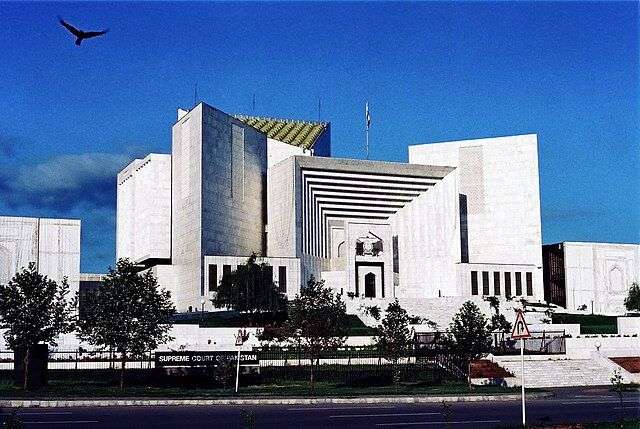
DEATH PENALTYAUGUST 15, 2026
Pakistan: SC upholds death sentence in ex-wife’s murder

DEATH PENALTYAUGUST 14, 2026