
CARIBBEAN. LEADERS INAUGURATE OWN COURT OF JUSTICE
Caribbean leaders inaugurated a court that would serve as the highest judicial body for much of the region, a step toward shedding their 170-year-old dependence on Britain's Privy Council that many had resented as a vestige of colonialism.
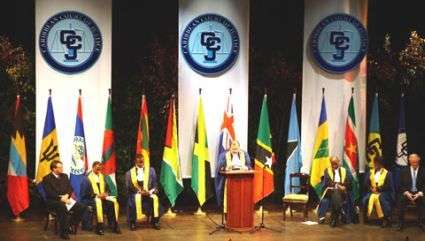
Caribbean leaders inaugurated a court that would serve as the highest judicial body for much of the region, a step toward shedding their 170-year-old dependence on Britain's Privy Council that many had resented as a vestige of colonialism.
The inauguration came after years of delays and despite political and legal obstacles still facing several countries trying to remove themselves from the jurisdiction of the London-based Privy Council.
``It's a birth that has not been without complications,'' said Chief Justice Michael de la Bastide.
Advocates said the Trinidad-based court will bolster sovereignty in a region where many countries gained independence less than four decades ago and other islands were still European territories.
``Today more than any other tastes like true emancipation. If a people cannot trust themselves to dispense justice upon themselves, what worth are they?'' St. Lucia Prime Minister Kenny Anthony told a gathered crowd.
Critics of the new court include Caribbean opposition politicians who said it would be vulnerable to political pressure and rights activists who warned it would open the door for governments to resume executions. Only Guyana and Barbados had completed legislation needed to adopt it as their final civil and criminal appellate court. Jamaica and Trinidad were mired in political battles over the court, while other countries were facing administrative difficulties.
The inauguration came after years of delays and despite political and legal obstacles still facing several countries trying to remove themselves from the jurisdiction of the London-based Privy Council.
``It's a birth that has not been without complications,'' said Chief Justice Michael de la Bastide.
Advocates said the Trinidad-based court will bolster sovereignty in a region where many countries gained independence less than four decades ago and other islands were still European territories.
``Today more than any other tastes like true emancipation. If a people cannot trust themselves to dispense justice upon themselves, what worth are they?'' St. Lucia Prime Minister Kenny Anthony told a gathered crowd.
Critics of the new court include Caribbean opposition politicians who said it would be vulnerable to political pressure and rights activists who warned it would open the door for governments to resume executions. Only Guyana and Barbados had completed legislation needed to adopt it as their final civil and criminal appellate court. Jamaica and Trinidad were mired in political battles over the court, while other countries were facing administrative difficulties.
— SOURCES
- (Sources: AP, 17/04/2005)